Fortune's loosestrife
Lysimachia fortunei Maxim.
Description
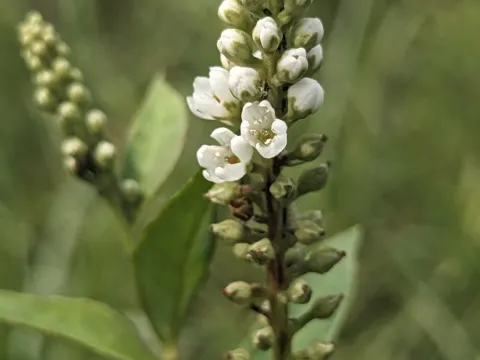
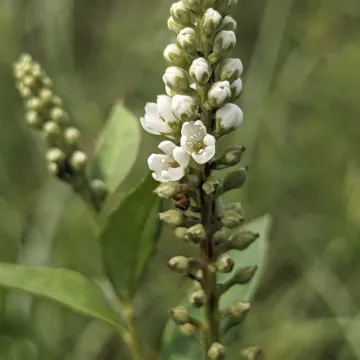
Fortune's loosestrife (Lysimachia fortunei Maxim.) is a perennial herbaceous plant belonging to the Primulaceae family. It is a distinctive species often recognized for its unique, slender spike-like inflorescences. While primarily used for ornamental purposes, the plant represents a specific segment of cultivated flora adapted to moisture-rich environments.
The plant originates from East Asia, primarily inhabiting regions across China, Japan, and the Korean Peninsula. Its natural distribution is tied to wetlands, riverbanks, and marshy meadows. This geographical history highlights its adaptation to saturated soil conditions, which must be replicated in cultivation settings to ensure optimal plant development.
Botanically, the plant features erect stems reaching heights between 30 and 60 centimeters. Its leaves are lanceolate, arranged in an alternate pattern, leading up to a terminal raceme of small, five-petaled white flowers. The rhizomatous root system is robust, contributing to the plant's ability to propagate and establish itself firmly in favorable environments.
Agronomic requirements for this species revolve around moisture management and soil quality. It thrives best in fertile, loamy soils that maintain high moisture content throughout the growing season. While it exhibits tolerance to partial shade, providing adequate light is essential for promoting dense flowering and preventing structural weakness in the stems.
Typical plant health challenges include susceptibility to fungal pathogens, particularly in conditions with poor airflow or stagnant water. Preventive measures such as appropriate spacing and regular monitoring are crucial. Beyond horticulture, the plant is historically valued in traditional medicine for its biochemical properties, although its primary modern utilization remains within landscape architecture.
- Requires consistent irrigation during dry periods.
- Ideal for waterside planting and bog gardens.
- Prone to leaf spot if humidity is too high without ventilation.
- Highly responsive to organic fertilizers applied in spring.
Photo gallery