
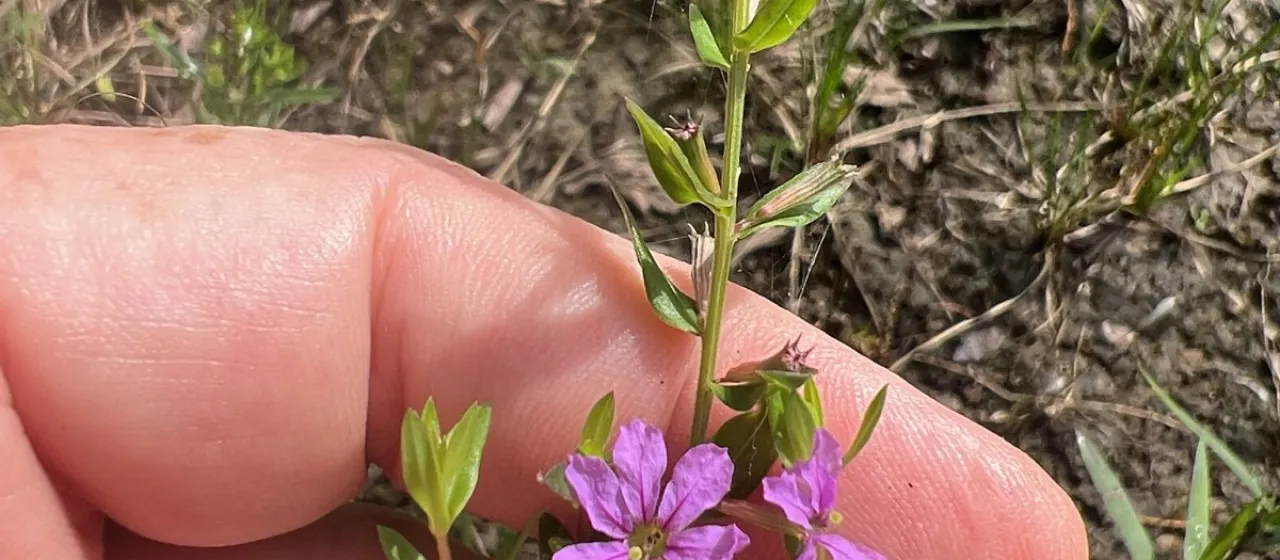
Description
Winged loosestrife (Lythrum alatum) is a perennial herbaceous plant belonging to the Lythraceae family. It is recognized for its vertical growth habit and vibrant inflorescences, making it a valuable addition to wetland ecosystems and specialized decorative gardens.
The species is native to North America, where it typically inhabits damp meadows, marshes, and riparian zones. Its natural distribution demonstrates a strong preference for moist soil conditions, which serves as a primary indicator for its successful cultivation in managed environments.
Botanically, the plant is identified by its stems which feature distinct, longitudinal wings. The leaves are generally lanceolate, arranged oppositely or alternately. The flowers, ranging in color from deep pink to purple, are arranged in terminal spikes. This architectural structure provides significant visual interest throughout the summer months.
For optimal growth, winged loosestrife requires full sun exposure and consistently moist to wet soil. While it is highly adaptable and hardy in various climates, it performs best when the substrate remains rich in organic matter. Maintenance is minimal; however, ensuring the soil does not dry out completely is essential for the plant's health and prolific blooming.
In terms of usage, the plant is widely favored for rain gardens, water edges, and pond landscapes. Beyond its aesthetic qualities, it serves as a critical nectar source for native pollinators, including bees and butterflies. Regarding pathology, it is relatively resistant, although growers should monitor for humidity-related pathogens such as powdery mildew or fungal leaf spots if the planting density is too high.