
Description
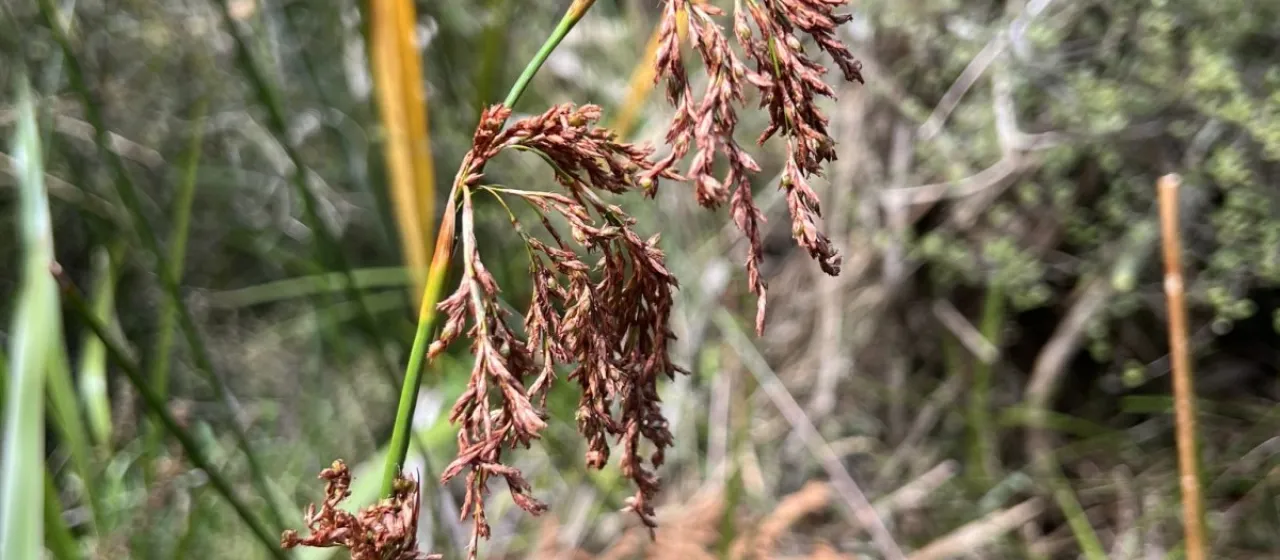
The Jointed twig-rush (Machaerina articulata) is a perennial herbaceous plant belonging to the Cyperaceae (sedge) family. It is a robust, rhizomatous plant known for its structural role in wetland habitats, often forming large, dense colonies in water-saturated soils or shallow waters.
Originating from the tropical and subtropical regions, primarily in Australia and the Pacific islands, this species thrives in wet environments. Its natural habitat includes riverbanks, lake fringes, and various types of marshes. It is specifically adapted to environments with permanent or seasonal inundation.
Botanically, Machaerina articulata is distinguished by its cylindrical stems that exhibit internal septa, giving them a jointed appearance. The leaves are typically linear, rigid, and evergreen. Its rhizomatous root system is extensive, anchoring the plant firmly in silt, peat, or clay substrates, which is crucial for its survival in fluctuating water levels.
Cultivation requirements for the Jointed twig-rush are centered on maintaining high soil moisture. In an agricultural or horticultural setting, the plant prefers full sun to light shade and organic-rich, acidic to neutral soil. Propagation is most efficiently achieved through the division of mature rhizomes during the dormant season, ensuring that the roots remain submerged post-planting.
The plant is highly valued for its utilitarian properties, particularly in environmental management:
- Phytoremediation of wastewater in artificial wetlands.
- Prevention of soil erosion along water margins.
- Use in ornamental landscaping for pond filtering zones.