
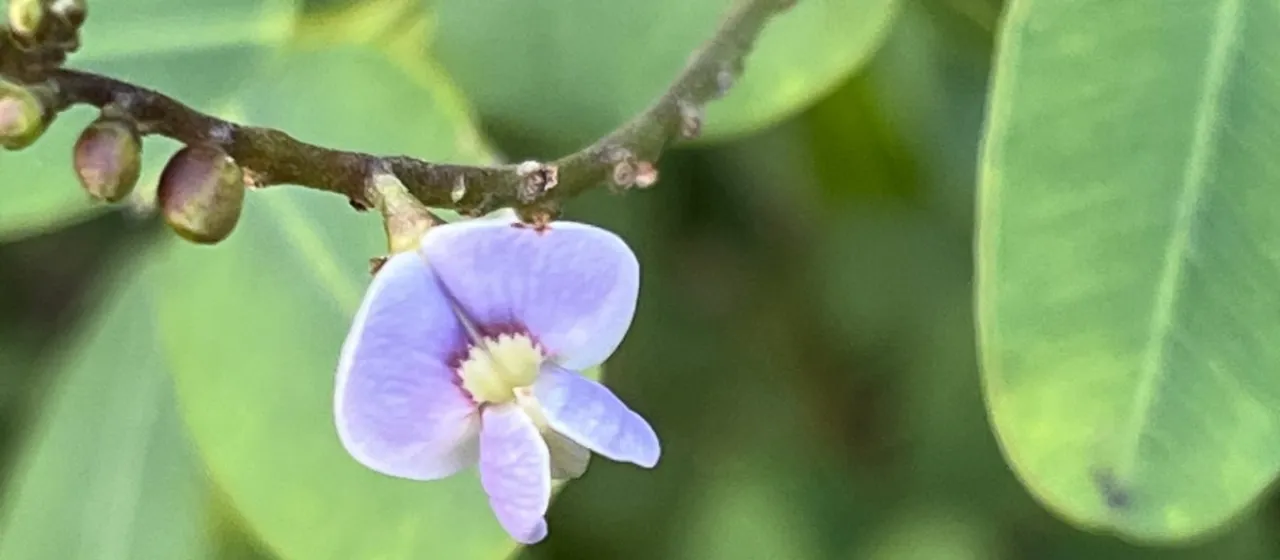
Description
Machaerium lunatum is a woody perennial plant belonging to the Fabaceae (legume) family. It typically grows as a large shrub or a climbing vine, perfectly adapted to the demanding environments of tropical estuarine regions and marshy coastal areas.
The native distribution of this species spans across the tropical zones of the Americas and Western Africa. It is a defining component of mangrove habitats, where it thrives in waterlogged, nutrient-rich, and often saline soils, functioning as a structural pillar of these unique coastal ecosystems.
Botanically, the plant is distinguished by its compound, alternate leaves and its unique, crescent-shaped, flattened pods. The woody structure is dense, which provides the plant with the necessary mechanical strength to withstand tidal flows and periodic inundation by seawater.
Regarding agrotechnical requirements, the species demands consistently high temperatures and humidity levels. It does not require intensive fertilization, as it is evolved to extract nutrients from complex waterlogged soils, though it relies on specific soil aeration patterns found in its natural habitat to remain healthy.
In terms of human use, the timber of Machaerium lunatum is highly valued for its durability and resistance to biological decay in humid environments. Additionally, the plant serves a critical environmental function by stabilizing riverbanks and coastal mudflats, acting as a natural shield against soil erosion in tropical climates.
- Family: Fabaceae
- Habit: Shrub/Vine
- Key Adaptation: Salinity tolerance
- Primary Use: Timber production, soil stabilization