
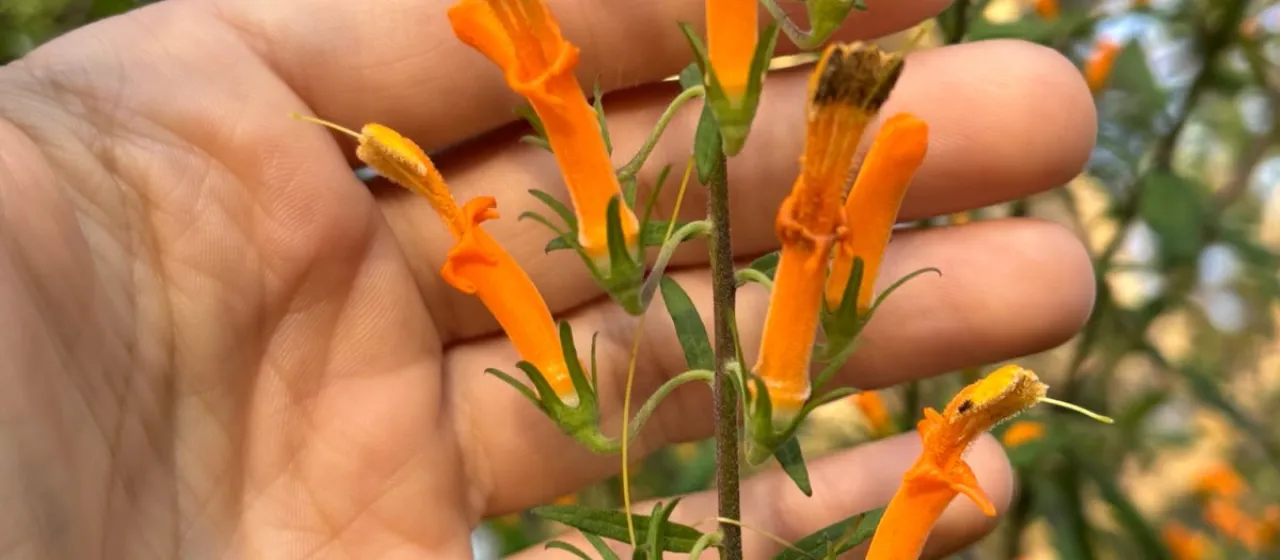
Description
Hummingbird flower (Macranthera flammea) is a fascinating botanical species belonging to the Scrophulariaceae family. Known for its brilliant orange-red blossoms, this perennial plant exhibits a hemiparasitic lifestyle, meaning it supplements its nutrient intake by tapping into the root systems of nearby host plants.
Native to the southeastern United States, specifically in regions across Florida, Alabama, and Georgia, this species thrives in wet, sandy soils. It is typically found in habitats such as pine forests, wet prairies, and the edges of swamps, where sunlight availability is high and moisture levels remain consistent throughout the growing season.
Botanically, the plant is characterized by its stiff, upright stems and lanceolate leaves. The most striking feature is the large, tubular flowers, which are specifically adapted for pollination by hummingbirds. These flowers produce nectar that acts as a vital energy source for various avian species within their native ecosystems.
Cultivation requires careful attention to environmental mimics. Successful growth depends on well-drained, acidic soil that retains moisture without becoming waterlogged. Growers must ensure that appropriate host plants are present in the vicinity, as the root system of Macranthera flammea is physiologically dependent on these associations to thrive.
While not a major commercial crop, it is highly regarded in conservation horticulture and specialized garden projects. Protection from common pests, such as aphids and fungal pathogens caused by high humidity, is essential for maintaining the health of the plant. Regular monitoring of leaf condition and soil moisture is recommended for gardeners cultivating this unique species.