
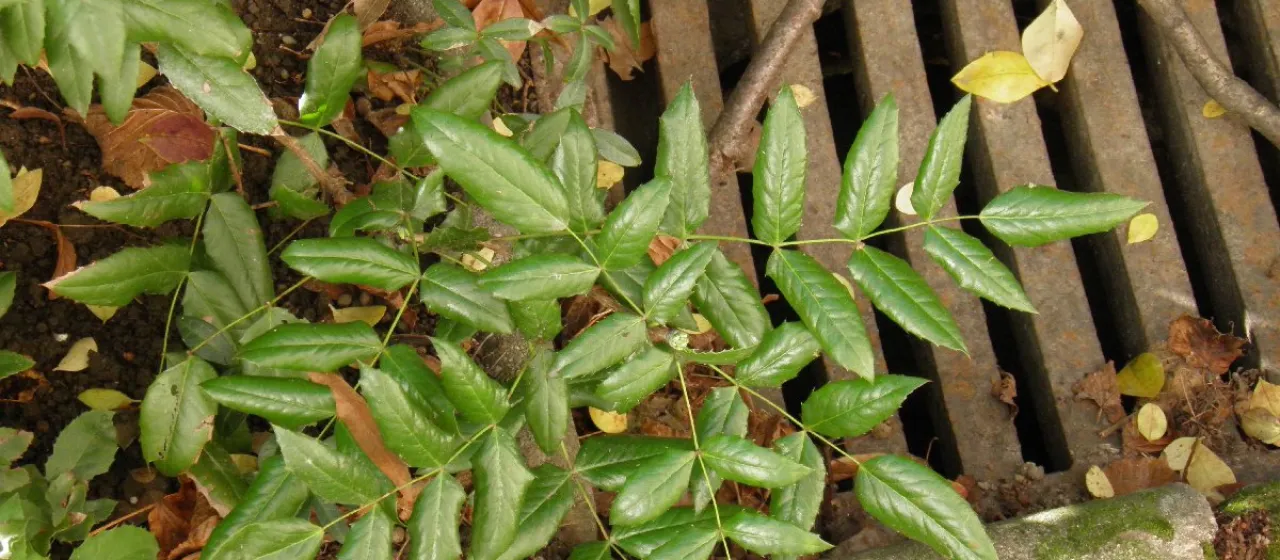
Description
Wagner's mahonia (Mahonia wagneri) is a hybrid evergreen shrub belonging to the Berberidaceae family. It is a cross-bred cultivar derived from Mahonia aquifolium and Mahonia lomariifolia, specifically developed to combine the structural beauty of its parent species with improved hardiness and aesthetic winter foliage.
The culture is primarily found in temperate climate zones, where it is cultivated in botanical gardens and private landscapes. Its natural distribution is linked to the ancestral history of the parent species, originating from North America and parts of Asia, but as a hybrid, it has become a staple in ornamental horticulture across Western countries.
Botanically, it features leathery, pinnate leaves with spiny margins that provide a unique texture. The foliage is noted for its ability to transition from deep green in the summer to a rich bronze or deep red during the colder months. In the spring, the shrub produces dense clusters of fragrant yellow flowers, followed by spherical, blue-black waxy berries.
The agronomic requirements involve well-draining, humus-rich soil with a slightly acidic to neutral pH. While it is tolerant of shade, the plant performs best in locations with partial shade, protecting it from intense afternoon sun. Proper maintenance includes consistent moisture management and seasonal mulching to suppress weeds and regulate root temperature.
- Effective for low-maintenance landscaping.
- Resistance to common deer browsing.
- Susceptibility to rust or mildew if air circulation is poor.
- Importance of annual pruning to maintain shape.
Economically and practically, Wagner's mahonia is utilized for its high ornamental value. It serves as an excellent choice for foundation plantings, informal hedges, and woodland gardens. Beyond aesthetics, the berries are edible and have historical use in jellies and syrups due to their tart flavor profile, making the shrub a functional addition to permaculture and edible landscaping designs.