
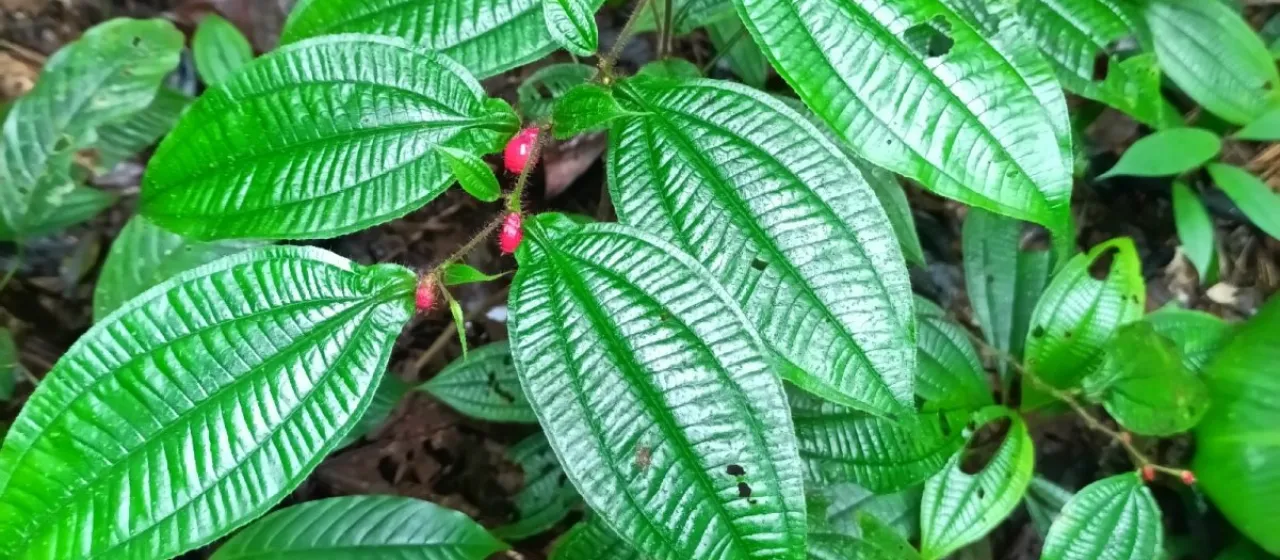
Description
Maieta guianensis is an evergreen tropical shrub belonging to the Melastomataceae family. In its natural habitat, the plant is renowned for its fascinating symbiotic relationship with ants, which inhabit specialized hollow structures on the leaf petioles, providing the shrub with protection against herbivores.
The plant is native to the tropical rainforests of South and Central America, including the Amazon basin and the Guianas. In agricultural or specialized cultivation contexts, this species requires environmental conditions that closely mimic its natural habitat, specifically high atmospheric humidity and consistently warm temperatures typical of tropical zones.
Botanically, this crop is a small shrub featuring opposite leaves with distinct venation patterns typical of the melastome family. It is well-adapted to low-light conditions under the forest canopy, meaning that in cultivation, it prefers filtered light and should be protected from harsh, direct sunlight that can cause leaf scorch.
Soil and agrotechnical requirements include the use of light, well-aerated, humus-rich substrates with an acidic to slightly acidic pH. Watering must be consistent and frequent, avoiding waterlogging, as the root system is highly sensitive to hypoxia. The ideal temperature for healthy development ranges between +22°C and +28°C throughout the year.
At present, Maieta guianensis is primarily found in scientific research environments, botanical gardens, and private collections rather than as a large-scale agricultural commodity. However, it continues to be of interest for pharmacological research and for specialized greenhouse ornamental cultivation due to its unique biological structure.
- High humidity requirements for optimal health.
- Needs to maintain symbiotic relationships with native insects.
- Sensitivity to extreme temperature fluctuations.
- Requirement for a loose, well-draining growth medium.