
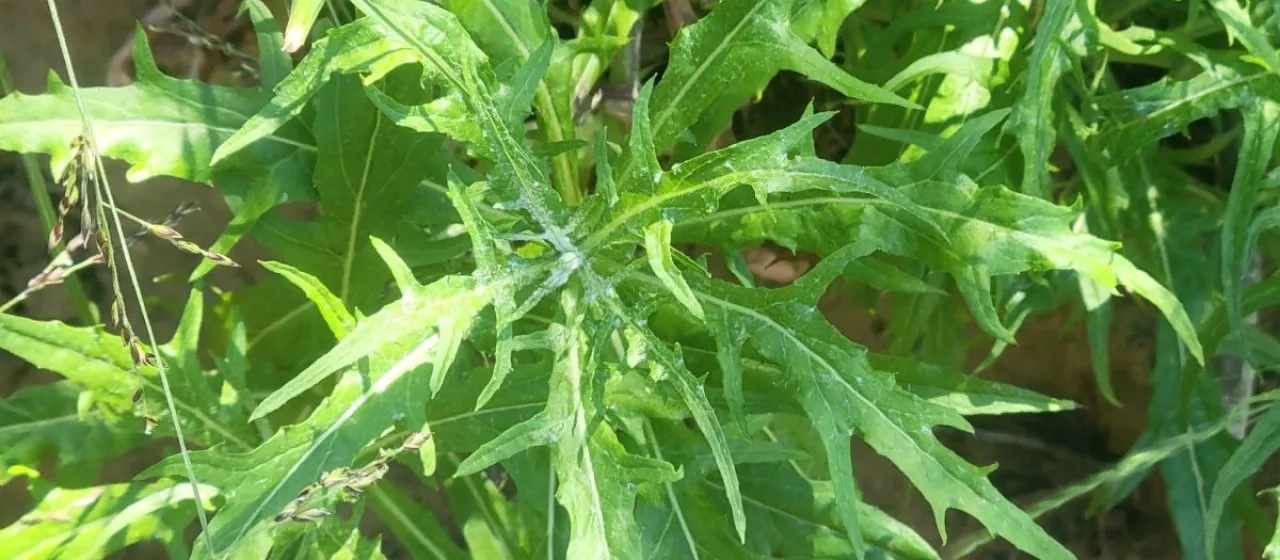
Description
Cliff desert-dandelion (Malacothrix saxatilis) is a perennial herbaceous plant belonging to the Asteraceae family. While not a traditional commercial crop, it is recognized for its ecological importance and utility in xeriscaping and soil stabilization projects in arid and semi-arid regions.
The species is native to the coastal and inland regions of California, where it thrives in harsh environments. Its evolutionary adaptation to rocky outcrops, coastal bluffs, and sandy soils makes it a resilient candidate for agricultural and environmental projects focused on land reclamation where resources like water are severely limited.
Botanically, Malacothrix saxatilis grows as a subshrub featuring branched stems and variable leaf morphology, ranging from linear to dissected shapes. The plant produces characteristic daisy-like flower heads in yellow or white tones. Its root system is notably robust, allowing it to penetrate rocky crevices and extract scarce moisture from deep or compacted substrates.
Cultivation requirements are centered around imitating its native habitat. Excellent drainage is non-negotiable, as the plant is highly susceptible to root decay if water accumulates around the base. It thrives in full sun and performs best in well-aerated, sandy, or rocky soil types. Irrigation should be minimal and carefully monitored to prevent soil saturation.
Main areas of horticultural and environmental utility include:
- Xeriscaping and drought-tolerant landscaping.
- Erosion control on sloped or disturbed land.
- Restoration of native habitats and ecosystem diversity.
- Ornamental value in specialized low-water botanical collections.
The plant is generally hardy, but it can be susceptible to common pests of the Asteraceae family, such as aphids and spider mites, especially in confined or poorly ventilated conditions. The most significant threat remains root pathogens caused by over-irrigation, making proper soil management the cornerstone of successful cultivation.