
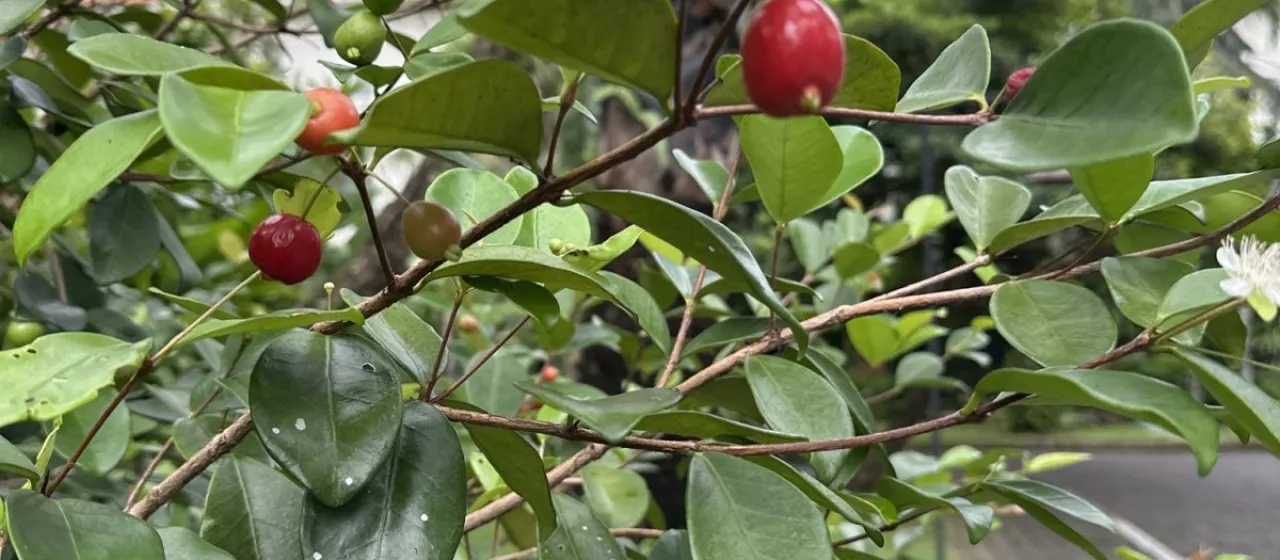
Description
The Barbados cherry (Malpighia glabra) is a perennial evergreen shrub or small tree belonging to the Malpighiaceae family. Often confused with its close relative Malpighia emarginata, this species is highly valued for its high nutritional density and its ability to thrive in tropical climates.
The plant originates from the Caribbean, Mexico, and parts of South America. It has successfully naturalized in many tropical regions worldwide, where it is cultivated in both small-scale gardens and larger plantations for its fruit production, which is rich in antioxidants and vitamin C.
Botanically, Malpighia glabra is characterized by its glossy, opposite leaves and small, showy pink or rose-colored flowers that appear in clusters. Its fruit, a bright red drupe, is typically spherical and possesses a distinctive taste. The plant's structure is generally shrubby, often reaching a height of 2 to 4 meters under proper maintenance.
For successful cultivation, the crop requires full sun exposure and well-draining soil with a slightly acidic to neutral pH. Agricultural management practices include regular pruning to encourage fruit set and the maintenance of a consistent watering schedule, especially during the flowering and development phases.
- Hardiness: Prefers tropical and subtropical climates.
- Sunlight: Needs at least 6-8 hours of direct sunlight.
- Soil type: Sandy loam or gravelly soils with organic matter.
- Propagation: Often performed through softwood cuttings.
Economically, the Barbados cherry is widely used in the food industry to create health supplements, juices, and jams due to its exceptional nutrient profile. Beyond its edible utility, the plant is also employed as a landscape element, serving as an effective hedging material that supports local biodiversity.
Typical plant health issues involve attacks by aphids, scales, and mites, which can be managed with integrated pest management (IPM) strategies. Fungal diseases related to root rot are the primary concern, making proper drainage and canopy ventilation essential components of the overall crop management strategy.