
Description
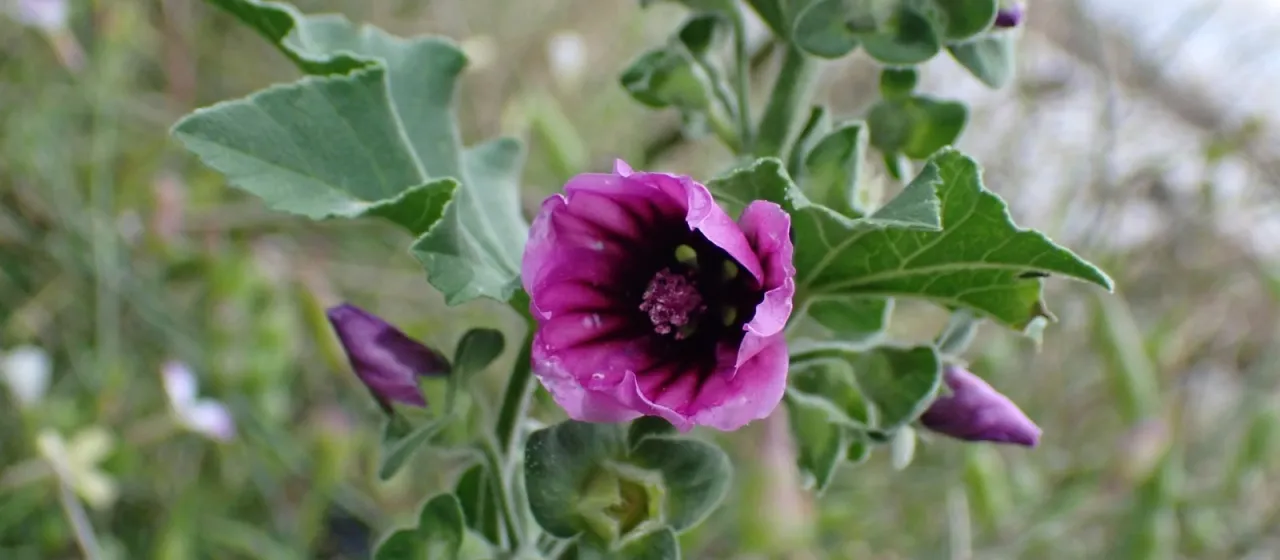
Tree mallow (scientific name Malva arborea, formerly Lavatera arborea) is a distinct species belonging to the Malvaceae family. Often referred to as a sub-shrub, this plant is noted for its rapid growth, often reaching significant heights within a single growing season. It is widely recognized for its robust, tree-like appearance and long-lasting floral display.
The species is native to the coastal regions of the Mediterranean and Western Europe. Its natural habitat includes cliffs and stony ground, which explains its high tolerance for coastal winds and salt-sprayed environments. This resilience makes it a favored plant for coastal landscaping and windbreak applications in maritime climates.
Botanically, tree mallow features large, velvety leaves that provide a striking texture to any landscape. The inflorescences are characterized by purple-pink, five-petaled flowers that often feature a darker center. The plant is usually short-lived, often grown as a biennial or a short-lived perennial, depending on the climatic conditions and winter severity.
When cultivating tree mallow, one must prioritize a sunny location with well-draining soil. It thrives in neutral to slightly alkaline pH levels and does not tolerate waterlogged conditions, which can lead to root rot. Regular pruning is recommended to maintain the plant's shape and to prevent it from becoming woody or top-heavy during windy weather.
Regarding health and maintenance, the plant is relatively hardy but can be susceptible to common pests such as aphids and spider mites, especially during hot, dry spells. Fungal diseases like rust and leaf spot are potential risks in humid environments. Ensuring proper spacing for air circulation is the best preventative strategy against these common pathological issues.