
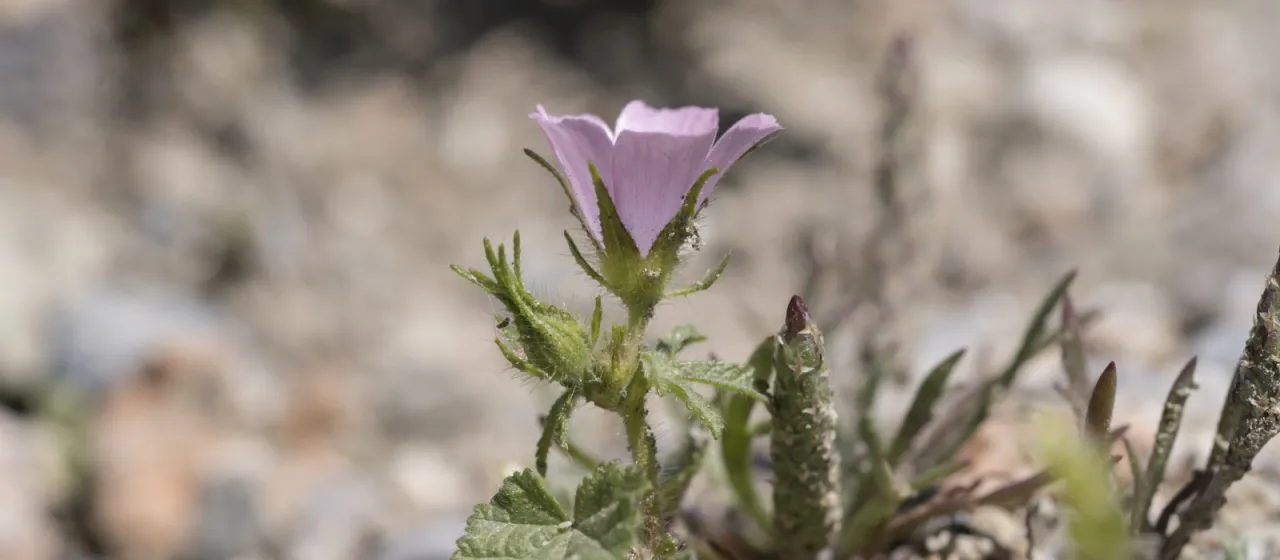
Description
Cretan mallow (Malva cretica) is an annual herbaceous plant belonging to the Malvaceae family. While not a large-scale commodity crop, it is a significant species within Mediterranean botanical studies and niche floriculture, valued for its natural resilience and distinct floral appearance.
Originating from the Mediterranean basin, with the island of Crete as a primary reference, this plant is naturally adapted to regions with warm, dry summers and mild winters. It is commonly found in rocky slopes, disturbed grounds, and open fields across Southern Europe and North Africa, showcasing its ability to survive in various nutrient-poor environments.
The botanical structure of Malva cretica consists of an upright stem typically ranging between 20 and 60 cm in height. Its leaves are palmate and pubescent, reflecting the plant's adaptation to arid conditions by minimizing transpiration. The flowers are solitary, emerging from leaf axils, typically featuring petals with delicate veining that serves as a guide for pollinators.
Agricultural requirements for the Cretan mallow focus on well-draining soils with a neutral pH. It is a heliophilic species, meaning it requires full sun exposure for optimal vegetative growth and flowering. Water management is critical; while the plant is drought-tolerant, supplementary irrigation during the early germination phase increases the success rate of the crop establishment.
In terms of хозяйственное (economic) utility, the plant is primarily utilized in biodiversity restoration projects and as a component in pollinator-friendly landscapes. Disease management involves monitoring for rust pathogens and common pests like aphids. Maintaining adequate spacing between plants is the most effective preventative measure against humidity-related issues in temperate climates.