
Description
Spanish mallow (Malva hispanica) is an annual herbaceous plant classified within the Malvaceae family. It is a distinct species known for its specific ecological niche and biological traits, which allow it to thrive in Mediterranean-type climates where summer drought is a common stress factor.
The native range of this species is primarily focused on the Iberian Peninsula and parts of North Africa. It has evolved to grow in well-drained, often rocky or calcareous soils, typical of open grasslands and disturbed areas in its natural habitat, which defines its preference for sunny cultivation sites.
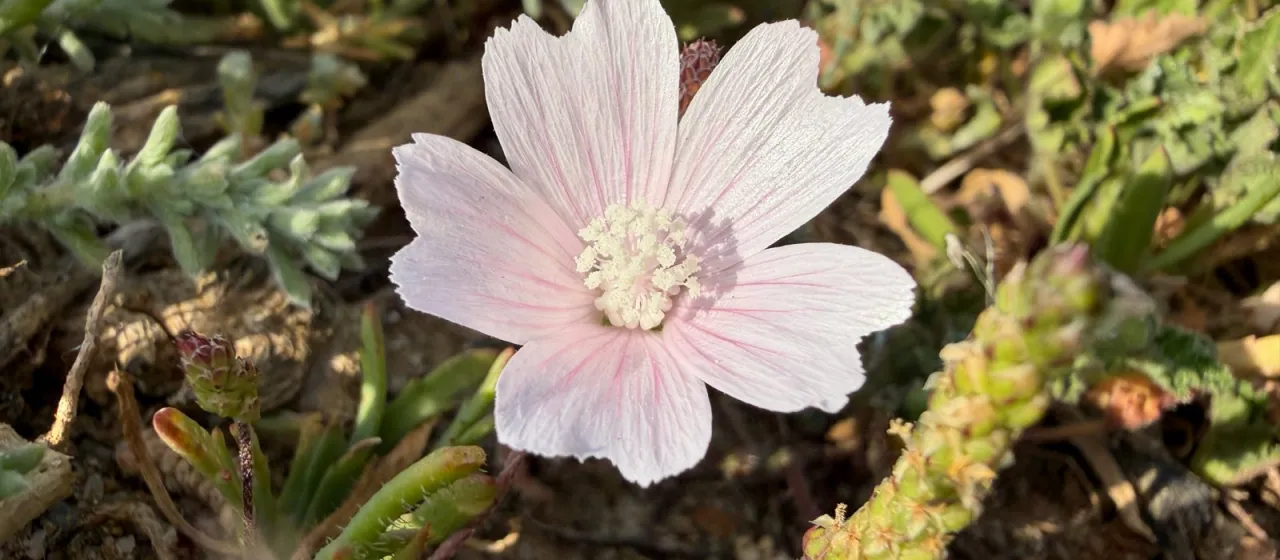
Botanically, Malva hispanica features erect stems that may be pubescent. The leaves are typically lobed, and the flowers exhibit the classic cup-shaped structure associated with the mallow genus, often displaying shades of pink to deep purple. The plant's structure supports efficient photosynthesis even under high light intensity.
Regarding agronomy, the plant is relatively undemanding. Successful cultivation requires choosing a site with excellent drainage to prevent root rot. Seeds are generally sown directly into the prepared seedbed in early spring. Minimal nitrogen input is usually required, as the plant is well-adapted to nutrient-poor soils.
Economically, the species is valued for its role in ornamental horticulture and as an auxiliary crop for supporting local pollinators. Its resilience makes it an interesting subject for low-maintenance landscaping and biodiversity programs, as it provides a stable food source for bees throughout its blooming period.
- High drought tolerance;
- Adaptable to poor soil conditions;
- Excellent nectar source for pollinators;
- Simple cultivation and low input needs;
- Natural resistance to common leaf pests.