
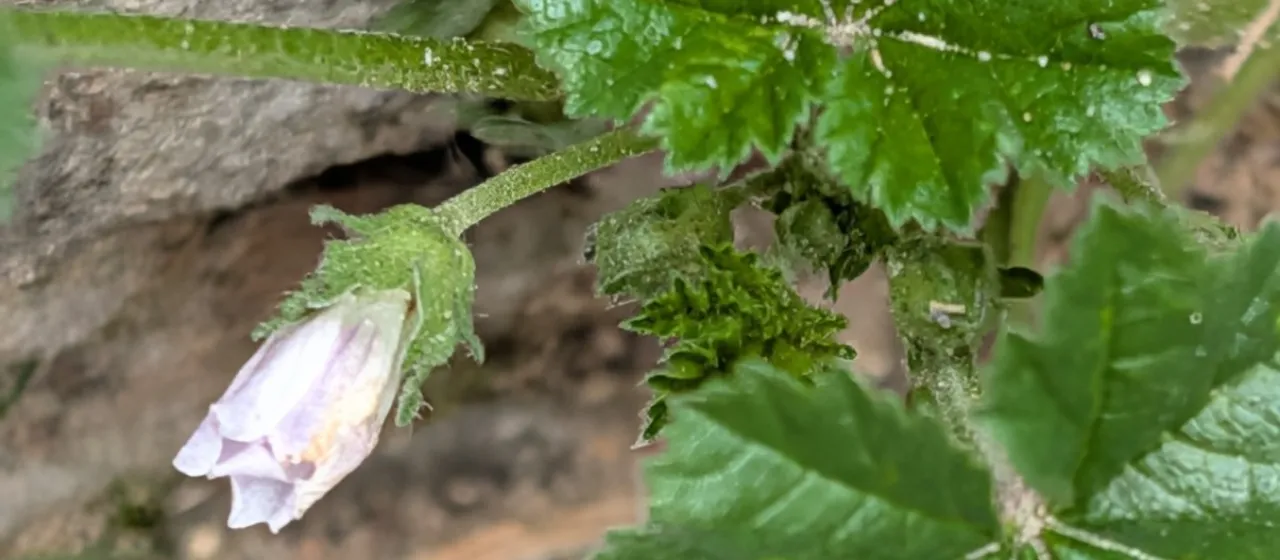
Description
Common mallow (Malva neglecta) is an annual or biennial herbaceous plant belonging to the Malvaceae family. It is widely recognized in agriculture and botany due to its distinctive fruit shape, which earns it the common name "cheeseweed," referencing its small, disc-like fruit segments.
Originally native to Europe, Northern Africa, and Western Asia, this species has successfully naturalized across various continents, including North America and Australia. It is frequently found in disturbed soils, roadsides, pastures, and garden beds, where it demonstrates significant ecological plasticity.
Botanically, the plant is characterized by a sprawling, procumbent growth habit with stems extending up to 60 cm. Its leaves are rounded and palmately lobed, while the flowers are relatively small, featuring white to pale pink petals. The root system is a deep taproot, allowing the plant to thrive in compacted or dry soils.
The agricultural requirements for common mallow are relatively low. It prefers nutrient-rich, moist, and well-drained soils, though it shows impressive tolerance for poor conditions. In managed fields, it is often treated as a weed that requires mechanical control, such as shallow cultivation, or the application of specific selective herbicides during the early stages of its development.
Economically, common mallow is valued for its medicinal properties. The leaves and seeds are rich in mucilage, which is used in traditional medicine to soothe inflammation. Beyond its medicinal utility, it serves as a source of forage for livestock and nectar for various pollinators. In some regions, its young leaves are harvested as edible greens for culinary purposes.
- High environmental adaptability.
- Significant mucilage content for medical use.
- Potential as a forage plant.
- Rapid colonization of disturbed habitats.