
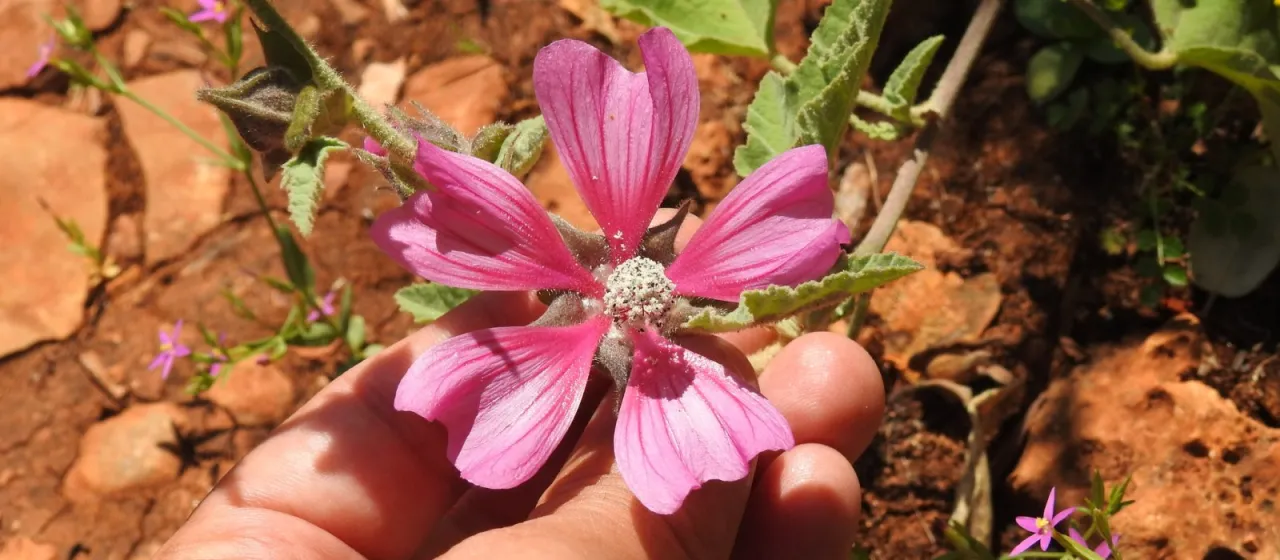
Description
Malva olbia, commonly referred to as a species of tree mallow, is a perennial subshrub belonging to the Malvaceae family. Unlike typical herbaceous mallows, this plant features woody stems at the base, allowing it to reach a considerable size and form a robust structural element in gardening settings.
The species originates from Western Mediterranean regions, particularly southern France. Its natural habitat includes rocky slopes and coastal scrublands where it thrives under direct sunlight. This geographical background defines its preference for temperate climates and its ability to withstand mild winters while requiring protection in harsher environments.
Botanically, Malva olbia is characterized by its large, lobed, hairy leaves and prominent, funnel-shaped flowers ranging from pink to deep lavender. The plant produces a long-lasting bloom, typically starting in mid-summer and persisting through the early autumn, providing significant aesthetic value for borders and architectural landscaping.
Regarding cultivation, the plant requires well-drained soil and a sunny location to flourish. It is moderately drought-tolerant once established but performs best when provided with consistent nutrients and soil aeration. Over-watering, especially in winter, must be avoided to prevent root rot, as the plant prefers dry-leaning conditions over swampy ground.
In terms of health and maintenance, Malva olbia can be susceptible to common mallow pests, including aphids and spider mites, which are manageable with standard horticultural practices. The most significant fungal threat is hollyhock rust; growers should ensure adequate spacing between plants to improve airflow and reduce humidity levels around the foliage.