
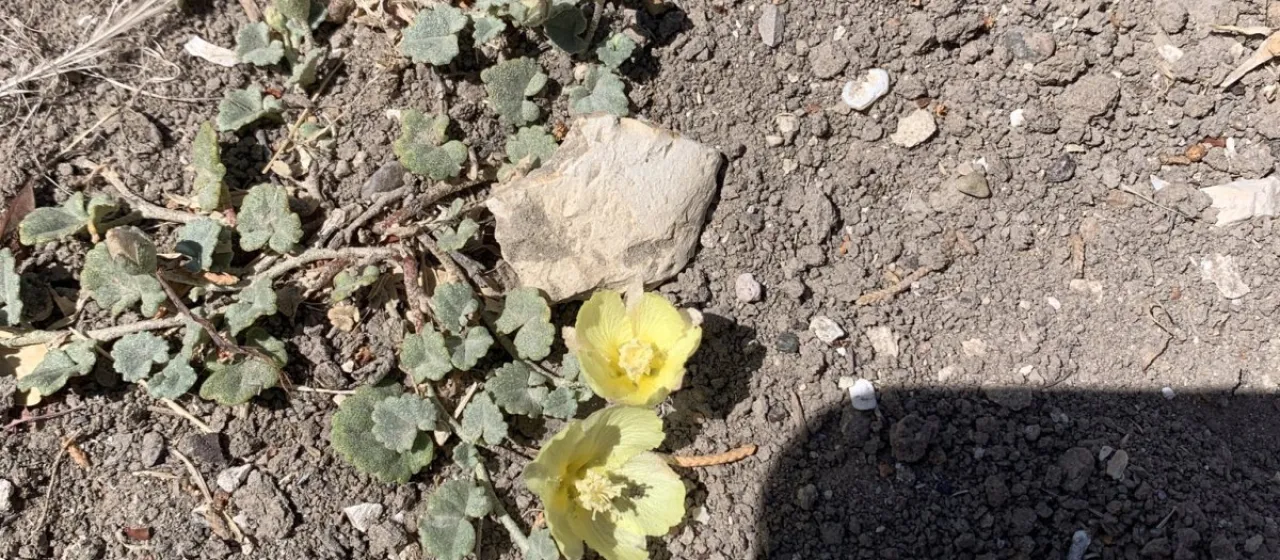
Description
Alkali mallow (Malvella leprosa) is a deep-rooted perennial herb belonging to the Malvaceae family. Although it is not a traditional crop, it is a significant botanical subject due to its status as a persistent and difficult-to-control weed in agricultural lands, particularly in regions with high soil salinity or periodic drought conditions.
Native to the arid and semi-arid regions of the Americas, this plant has spread into various irrigated agricultural zones. It thrives in disturbed soils and is commonly found in alfalfa fields, cotton plantations, and along irrigation ditches. Its ability to withstand high salt concentrations in the soil gives it a competitive advantage over many common field crops.
The morphology of the plant is defined by its distinct greyish-green foliage covered with star-shaped (stellate) hairs, which help minimize water loss. The plant develops a robust, extensive underground rhizome system that allows it to regenerate even after the surface growth has been removed. Its flowers are generally small, featuring the characteristic structural traits of the mallow family.
Effective management of this species is challenging and requires a long-term approach:
- Mechanical control through repeated deep cultivation to starve the root system.
- Application of selective systemic herbicides during the peak of vegetative growth.
- Utilization of competitive cover crops to suppress seedling emergence.
- Regular monitoring of field margins and fallow lands to prevent spread.
In terms of agricultural impact, Alkali mallow is considered a nuisance because it competes intensely for moisture and soil nutrients. It is not cultivated for human or animal consumption. Understanding the biology of Malvella leprosa is essential for farm managers who aim to maintain high yields in arid climates where this resilient weed poses a constant threat to productivity.