
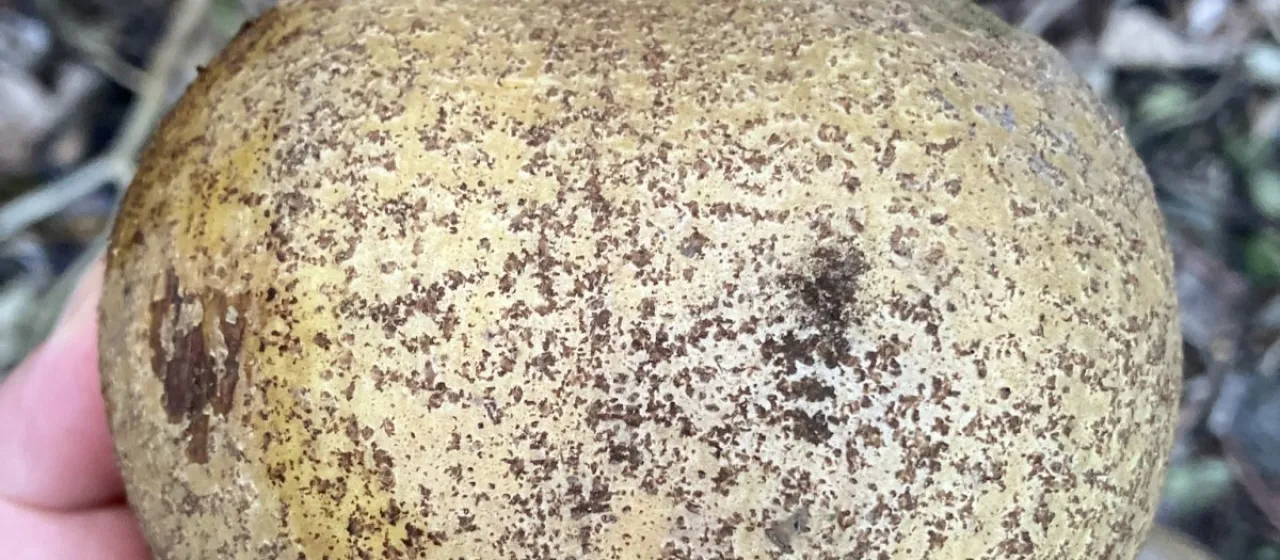
Description
The Mamey apple (Mammea americana L.) is a prominent evergreen fruit tree belonging to the Clusiaceae family. Often referred to as the Saint-Domingue apricot, this robust plant produces large, edible fruits highly valued in its native tropical environments. The tree itself is highly ornamental, characterized by a dense, symmetrical canopy and thick, glossy foliage that remains green throughout the year.
The species is indigenous to the Caribbean region and the northern parts of South America. Over the centuries, the plant has been naturalized across various tropical zones globally, including Southeast Asia and parts of West Africa. It thrives primarily in lowland tropical climates where temperatures remain consistently warm, and the humidity levels support continuous vegetative growth throughout the year.
Botanically, the tree is known for its slow growth rate, often taking several years to reach maturity and fruit production. The flowers are solitary or clustered, white, and fragrant, developing into large spherical fruits with a thick, leathery, russet-colored rind. Inside, the fruit contains orange to yellow firm, fibrous yet succulent flesh, which houses one to four large seeds that are sometimes used in local medicinal preparations.
Cultivation requirements for the Mamey apple center around soil quality and water management. It prefers deep, rich, and well-drained alluvial soils but shows remarkable adaptability to various tropical soil types. While it requires moisture, it is susceptible to root rot if water stagnates, making site selection on slightly sloping ground essential for optimal tree health and productivity.
- Requires full sunlight for maximum fruit yield.
- Sensitive to frost and cold winds.
- Generally propagated by seed, though grafting is preferred for uniformity.
- Low pest pressure due to natural latex content in plant tissues.
Economically, the Mamey apple serves multiple roles. The fruit is widely consumed fresh or prepared into preserves, jams, and juices, making it a valuable local crop. Beyond its food value, the tree possesses significant potential in integrated pest management systems, as its seeds and foliage contain insecticidal properties. Furthermore, the timber of the tree is prized for its durability, used extensively in construction and high-quality furniture making.