
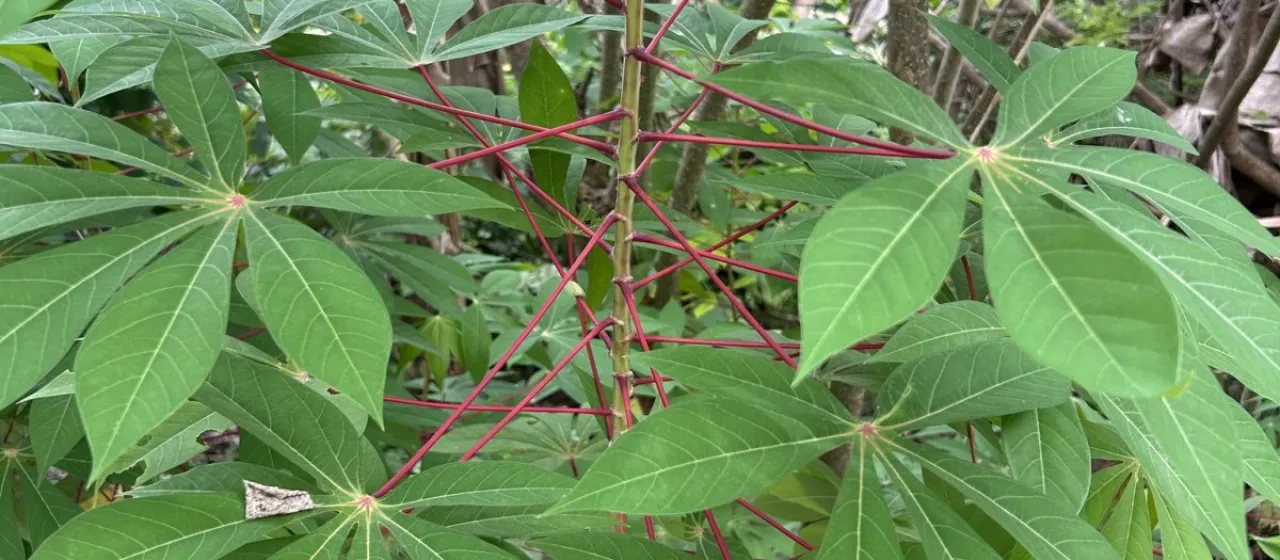
Description
Manihot guyanensis is a tropical plant species belonging to the Euphorbiaceae family. It is a perennial shrub closely related to the commercially important cassava, Manihot esculenta. While less commonly cultivated on a global scale, it serves as an important genetic resource for studying the diversification and resilience of the Manihot genus.
The species is native to the tropical regions of South America, specifically the Guiana Shield and parts of the Amazon Basin. It thrives in high-temperature, high-humidity environments typical of tropical rainforests. Its natural habitat is characterized by well-distributed rainfall and acidic, nutrient-poor soils common in the equatorial belt.
Botanically, it exhibits the characteristic features of the genus: palmately lobed leaves and a root system that can develop significant storage organs. The plants typically reach a height of 1 to 3 meters. They produce small flowers in racemes, and like many Euphorbiaceae, the plant tissues often contain latex and cyanide-producing compounds as a defense mechanism against herbivores.
Agronomic requirements are centered around the need for well-drained soil and high temperatures. In cultivation, it is propagated primarily through stem cuttings, which ensures genetic uniformity. Maintaining soil moisture is critical in the early stages, although established plants demonstrate a moderate level of resilience to environmental stress compared to strictly domesticated varieties.
The primary agricultural interest in Manihot guyanensis lies in its potential as a starch source and its secondary metabolic compounds. Typical pests include various species of mites and mealybugs, which can cause significant foliar damage. Controlling these pests and managing soil-borne fungal pathogens are essential components of maintaining a healthy plantation in its native range.