
Description
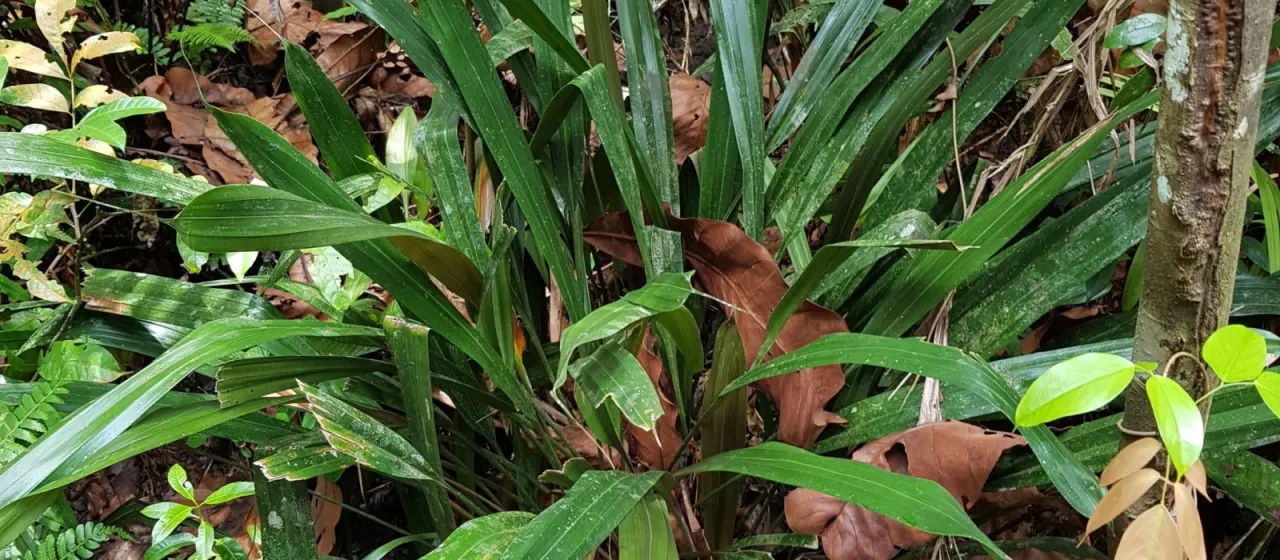
Mapania cuspidata is a perennial herbaceous plant belonging to the Cyperaceae family. It is recognized for its robust, rhizomatous habit and its distinctive appearance, forming dense, palm-like rosettes of long, arching, and leathery leaves that provide a lush, tropical aesthetic to its natural environment.
The plant originates from the humid tropical regions of Southeast Asia. Its native range includes countries like Malaysia and Indonesia, where it thrives in the understory of dense rainforests. It is typically found growing along riverbanks or in damp, shaded forest floors where high humidity and stable temperatures persist year-round.
Botanically, Mapania cuspidata is characterized by its stiff, lanceolate leaves with sharp, pointed tips, which serve as its common naming reference. The plant possesses a shallow but vigorous root system designed to absorb nutrients and moisture efficiently from the forest floor’s decaying organic matter.
Agricultural and horticultural requirements necessitate a high-humidity environment and consistent moisture. It requires a well-drained but moisture-retentive soil, ideally rich in peat or organic compost. Proper cultivation involves protecting the plant from direct sunlight, which can scorch the foliage, and maintaining a temperature range conducive to tropical growth.
- Requires consistent soil moisture without waterlogging.
- Thrives in partial to deep shade conditions.
- Benefits from high ambient humidity (above 60%).
- Sensitive to low temperatures and frost.
In terms of usage, the plant is primarily cultivated as an ornamental specimen for botanic gardens, conservatories, and specialized indoor landscapes. Disease management focuses on preventing root rot through careful water control, while common pests include sap-sucking insects like spider mites, which can be managed with biological control methods or mild horticultural soaps.