
Description
California manroot (Marah fabacea) is a perennial herbaceous vine belonging to the Cucurbitaceae family. It is best known for its exceptionally large, tuberous root system, which can weigh several kilograms and serves as a vital energy reservoir, allowing the plant to thrive in regions with distinct wet and dry seasons.
The plant is native to the coastal regions of California. Its typical habitat includes open hillsides, scrublands, and canyons. This species has evolved to endure Mediterranean-style climates, where it remains dormant during the hot, dry summer months and emerges rapidly as soon as the winter rains begin.
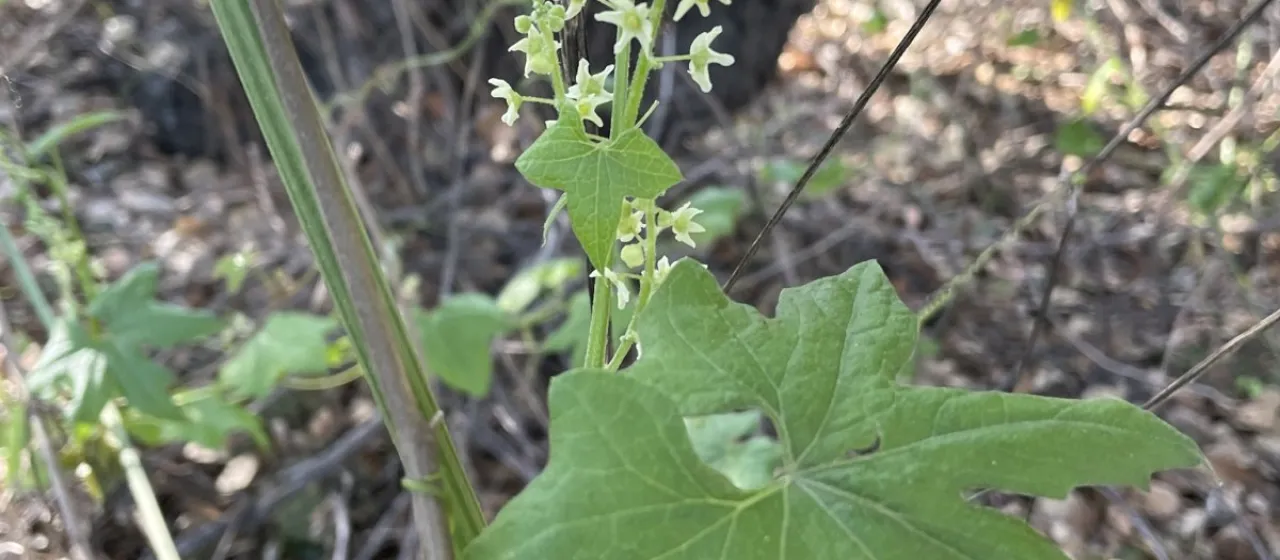
Botanically, the plant is characterized by its rapid growth rate, producing long, vine-like stems that utilize tendrils to climb over shrubs and trellises. Its foliage is palmately lobed and lush. The fruit is notably prickly, enclosing large, starch-rich seeds that are saturated with saponins, a characteristic that defines its chemical profile.
Cultivation requires well-drained, porous soil and ample space for vertical growth. While the plant is drought-tolerant, consistent moisture is necessary during the active growing phase. Farmers and gardeners should ensure that the soil does not become waterlogged, as the large tubers are susceptible to fungal rot if drainage is insufficient.
Economically, the plant is valued for its saponin content, which has historical applications as a natural soap substitute. In modern times, it is often utilized in ornamental horticulture for rapid screening and vertical landscaping. Some research suggests potential utility in phytochemical extractions, although it is not grown as a major commercial crop.
- Massive tuberous root system adapted for water storage.
- High levels of natural saponins throughout the plant.
- Fast growth cycle during the cool, wet season.
- Resilient to typical pests affecting other cucurbits.