
Description
Marattia douglasii is a distinguished species of fern belonging to the ancient family Marattiaceae. Native to the Hawaiian Islands, this plant thrives in the understory of lush, moist mountain forests. It is highly regarded by botanists and specialized horticulturists as a living remnant of evolutionary history, displaying primitive yet visually striking morphological traits.
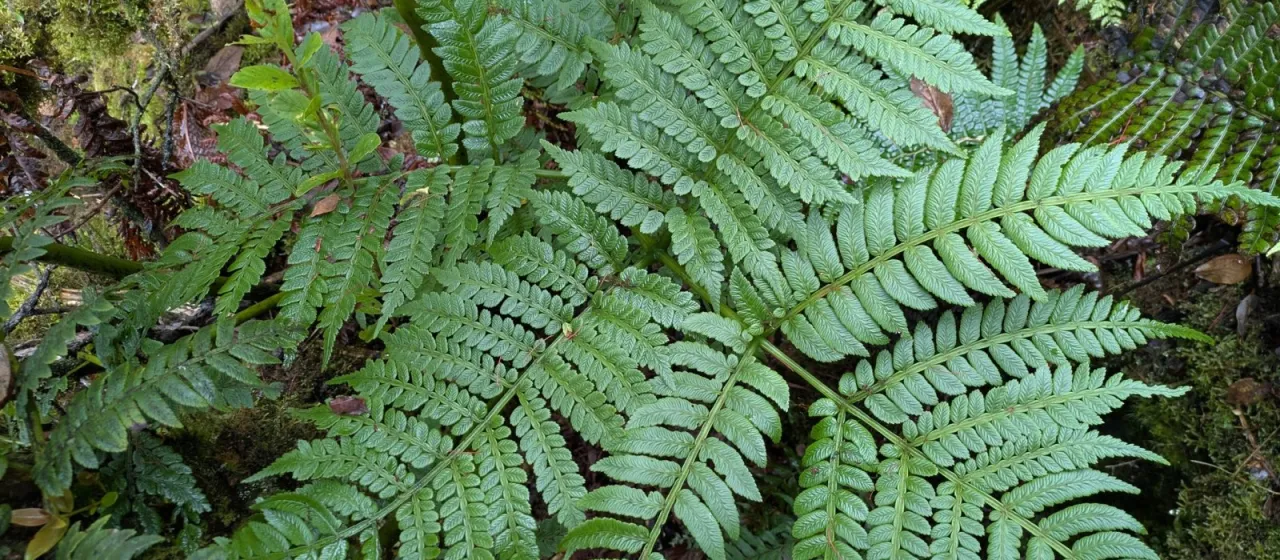
The botanical structure of this fern is defined by a thick, fleshy rhizome that supports large, arching fronds. These fronds can grow quite massive, showcasing a bipinnate structure with thick, leathery leaflets. A unique feature of this species is the presence of synangia, which are fused sporangia located on the undersides of the leaflets, serving as the reproductive organs of the plant.
In terms of climate requirements, this plant is strictly adapted to tropical or greenhouse environments. It demands high relative humidity, ideally exceeding 70%, and a consistent temperature range. It cannot tolerate drought or freezing conditions. Light exposure should be filtered and diffuse, as the plant is adapted to the deep shade provided by the tropical forest canopy.
Cultivation practices focus heavily on substrate composition. The growing medium must be highly porous, consisting of organic material like peat, bark, and perlite to ensure optimal gas exchange at the roots. Constant moisture is essential, but the pot must provide excellent drainage to prevent the fleshy rhizome from developing root rot, which is a primary cause of plant failure in non-native environments.
Horticulturally, Marattia douglasii is primarily used as an ornamental specimen in conservatories and botanical gardens. While it does not have industrial agricultural applications, it remains a focal point for plant conservation. Typical issues include susceptibility to scale insects and mealybugs in enclosed spaces, as well as fungal leaf spots if the ambient airflow is insufficient to dry the foliage after misting.