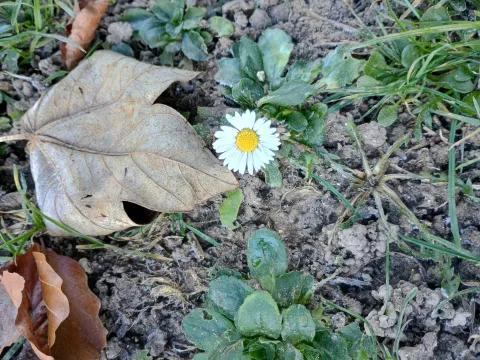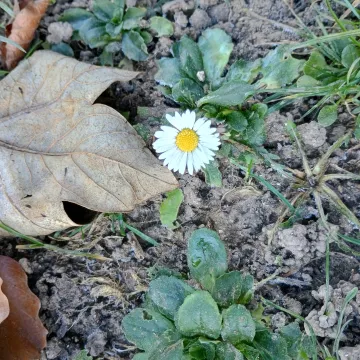
Common daisy
Bellis perennis L.
Description
The common daisy (Bellis perennis L.) is a perennial herbaceous plant belonging to the Asteraceae family. In agricultural and horticultural contexts, it is widely utilized for its aesthetic value, rapid propagation, and durability in various landscape settings.
The species is native to western, central, and northern Europe, but has naturalized across almost all temperate regions of the world. It is highly adaptable and can be found growing in diverse habitats, ranging from cultivated lawns and meadows to wild pastures and field borders.
Botanically, the plant is characterized by a basal rosette of spatulate, slightly hairy leaves. It produces solitary capitula (flower heads) on leafless stalks, typically appearing in early spring. The root system is fibrous and shallow, necessitating consistent moisture for optimal plant development.
In terms of agricultural requirements, the common daisy thrives in full sun to partial shade and prefers fertile, moist, well-drained soils with a slightly acidic to neutral pH. Proper maintenance includes periodic fertilization, regular mowing of lawn-grown plants to promote uniform appearance, and irrigation during prolonged drought periods.
Key areas of horticultural and economic utility include:
- Landscape design and ornamental bedding.
- Establishment of sustainable, low-maintenance turf.
- Container gardening and balcony floral displays.
- Utilization in traditional herbal medicine for topical applications.
Common issues affecting plant health include fungal diseases like powdery mildew, rust, and stem rot, often exacerbated by poor drainage or overcrowding. In terms of pest management, monitoring for slugs, snails, and aphids is critical, as these organisms can significantly damage both the foliage and the flower buds.
Photo gallery