
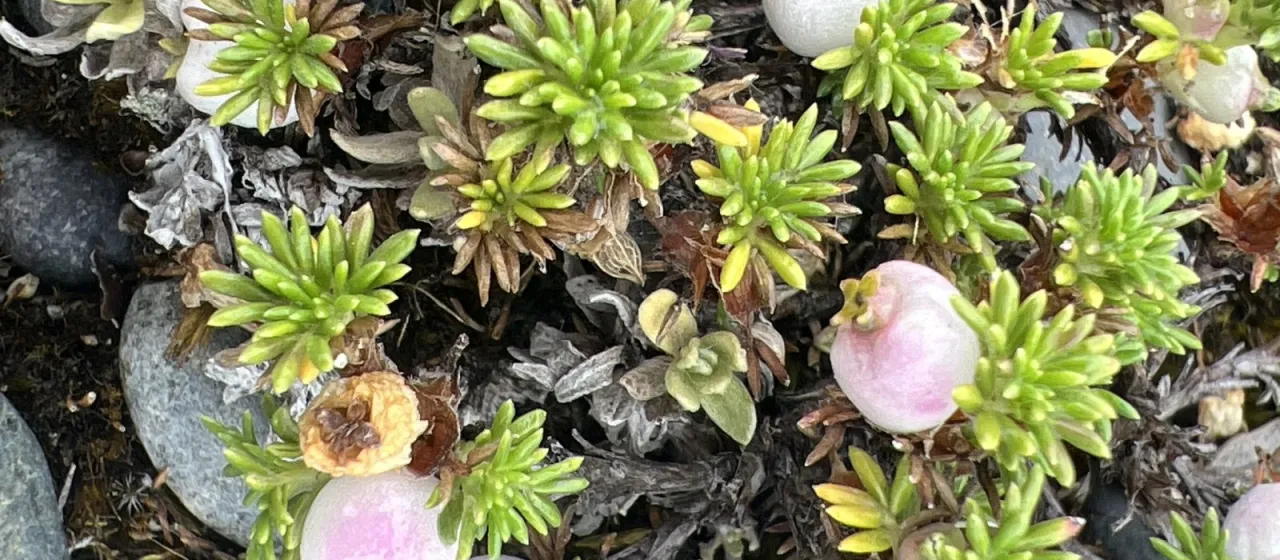
Description
Margyricarpus setosus, commonly known as the pearl fruit, is an evergreen subshrub belonging to the family Rosaceae. It is recognized for its unique appearance, characterized by small, needle-like leaves and pearl-white fruit that provides a distinct ornamental value in various agricultural and landscape settings.
The plant originates from the high-altitude regions of South America, particularly the Andes mountain range. It has evolved to thrive in rocky, nutrient-poor substrates, demonstrating remarkable hardiness against extreme weather conditions and high exposure to ultraviolet radiation common at such elevations.
From a botanical standpoint, this species displays a dense, low-growing growth habit. The stems are typically woody at the base with slender, persistent leaves. The reproductive structures produce small flowers which transition into succulent, white fruits; these fruits are often cited as the primary visual interest for both botanical collections and specialized gardens.
Cultivation requirements are strict regarding soil composition. The primary necessity is an exceptionally well-draining substrate, such as a rock garden soil mix or sandy loam. It is sensitive to excessive humidity, particularly in the root zone, making careful irrigation management essential for successful propagation in cultivated environments.
In terms of agricultural and commercial use, Margyricarpus setosus is valued for its potential in pharmaceutical research due to its secondary metabolites, which possess anti-inflammatory properties. Furthermore, it is increasingly popular in xeriscaping and sustainable gardening, where its low water requirement makes it an ideal candidate for environmentally conscious planting schemes.
- Excellent tolerance for poor, stony soils.
- High resistance to direct sunlight.
- Low nutrient requirements.
- Exceptional aesthetic value for alpine landscaping.