
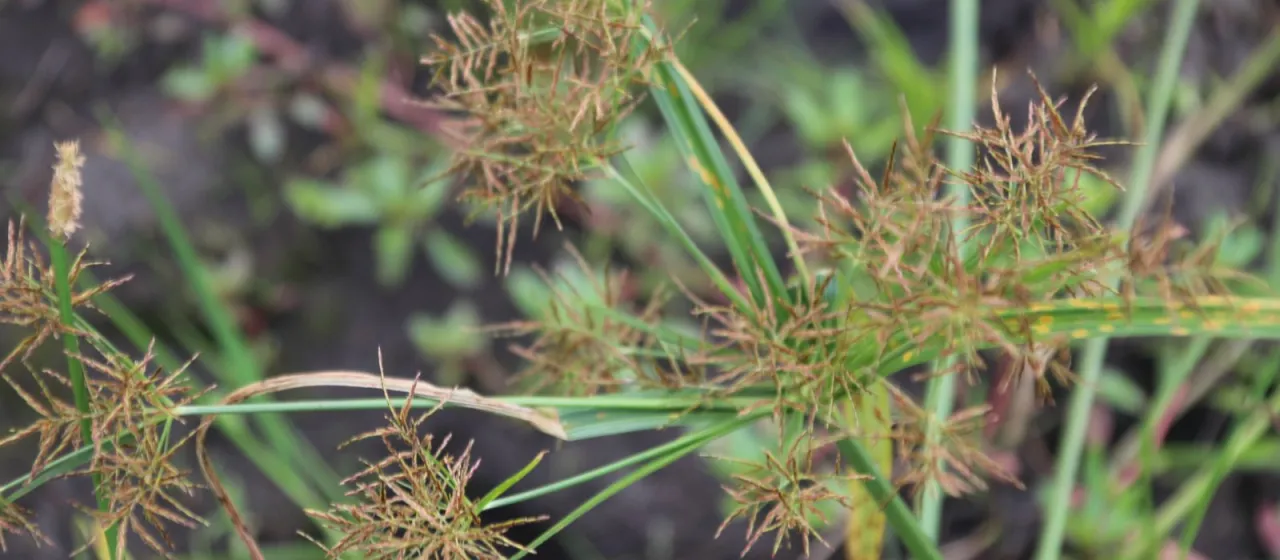
Description
Long-bracted mariscus (Mariscus longibracteatus) is a perennial herbaceous plant belonging to the Cyperaceae family. It is a specialized crop, highly adapted to aquatic or semi-aquatic environments, often found in wetlands and riparian habitats where it plays a significant role in stabilizing the ecosystem.
The species originates from the tropical and subtropical regions of the Americas. Its natural range is characterized by high humidity, river floodplains, and marshy areas, where it thrives by developing robust root systems that allow it to dominate in saturated soil conditions.
Botanically, Mariscus longibracteatus is distinguished by its inflorescence structure, where the bracts (modified leaves) extend significantly beyond the flowers, giving it its name. The stalks are typically triangular in cross-section, a hallmark feature of the sedge family, with foliage that is both tough and fibrous.
Cultivation requirements involve maintaining a high water table and consistent moisture levels. The soil should be nutrient-rich, ideally loamy or peaty, to support the plant's aggressive growth habit. Agronomically, the crop requires full sun exposure and warm climate conditions to reach maximum biomass productivity, making it suitable for protected wetland agriculture.
Regarding its utility and maintenance:
- Applications include erosion control on pond edges and phytoremediation of polluted water.
- Disease management focuses on preventing fungal root rot during stagnant water periods.
- Pest control involves monitoring for insects that feed on the succulent bases of the shoots.