Marula
Sclerocarya birrea (A. Rich.) Hochst. ssp. caffra (Sond.) Kokwaro
Description
The Marula tree (Sclerocarya birrea ssp. caffra) is a member of the Anacardiaceae family, which also includes the mango, cashew, and pistachio. This resilient species is native to the savanna regions of Southern and West Africa, where it has been utilized for centuries as a vital source of nutrition and economic sustenance.
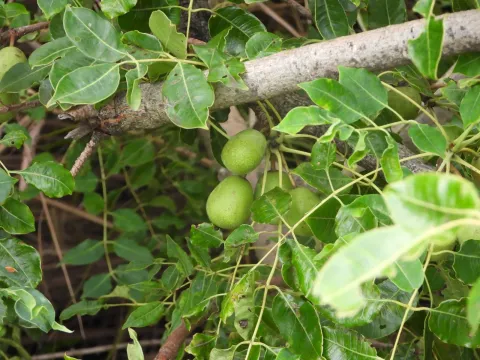
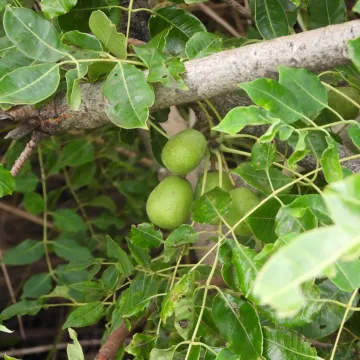
Botanically, Marula is a deciduous, dioecious tree. It grows up to 18 meters tall and is characterized by a grey, mottled bark and a broad, spreading crown. The tree produces small, plum-like fruits that turn bright yellow when fully ripe, containing a juicy, tart, and highly vitamin-rich flesh around a hard, woody stone.
Regarding climate and soil, Marula thrives in frost-free, semi-arid environments with deep, well-drained sandy or loamy soils. While it is highly drought-tolerant once established, young trees require consistent irrigation and protection from cold snaps. Propagation is usually achieved through seeds, though grafting is preferred in commercial orchards to ensure consistent fruit quality and sex distribution.
Cultivation practices involve proper orchard spacing to accommodate the tree's canopy growth and minimal pest management. Typical issues include infestation by fruit-boring insects and susceptibility to root rot if soil drainage is poor. Integrated pest management strategies are often employed to maintain healthy yields without excessive reliance on chemical inputs.
The commercial applications of Marula are diverse. The succulent fruit pulp is widely used to create spirits, juices, and jams. The stone contains kernels rich in oil, which is highly sought after in the international cosmetic market for its skin-soothing properties. Furthermore, almost every part of the tree, including the bark and leaves, holds significance in traditional medicine practices.
- High Vitamin C content in the fruit pulp.
- Nutrient-dense kernels with high oil yield.
- Important ecological role in the African savanna.
- Significant potential for sustainable agriculture in arid zones.
Photo gallery