
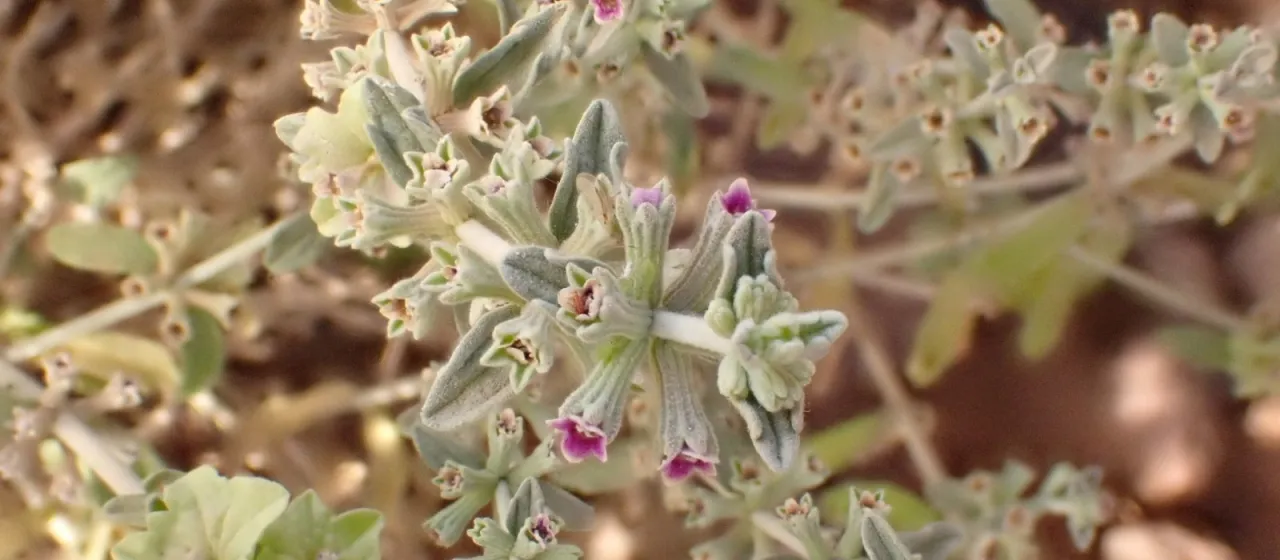
Description
Desert horehound (Marrubium deserti) is a perennial herbaceous plant belonging to the Lamiaceae family. This species is highly specialized for survival in harsh desert environments, displaying unique physiological adaptations that allow it to thrive where many other crops would perish.
The plant is native to arid regions, specifically across North Africa and parts of the Middle East. Its cultivation is primarily localized in areas where extreme heat and minimal annual rainfall are the norm, making it a potential candidate for sustainable farming in desertified or arid agricultural zones.
Botanically, it is distinguished by a dense coating of fine hairs on its stems and foliage, which serves as a thermal barrier and reduces water loss. The leaves are typically wrinkled and greyish-green, while the small flowers appear in clusters at the leaf axils, reflecting the structural hallmarks of the mint family.
In terms of agricultural requirements, the desert horehound demands full sun exposure and extremely well-draining, alkaline soil. It is highly intolerant to moisture-retentive, heavy clay soils, which can lead to fungal infections and rapid root rot. Standard practice involves minimal irrigation once the plant is established.
The primary хозяйственное usage of this plant involves the pharmaceutical industry, where it is valued for its bioactive compounds, particularly diterpenes and volatile oils. These substances are widely recognized for their potential health benefits, including efficacy as a natural expectorant and anti-inflammatory agent.
- Exceptional drought tolerance
- Adaptability to nutrient-poor soils
- High potential for medicinal oil extraction
- Requirement for minimal water input
- Natural pest resistance in dry climates