
Description
Marrubium peregrinum, commonly known as the peregrine horehound, is a perennial herbaceous plant belonging to the Lamiaceae family. As a crop, it is gaining interest for its resilience and unique phytochemical profile. It is morphologically related to the common horehound but exhibits distinct growth patterns that make it an interesting subject for specialized botanical cultivation.
The plant is native to Southeastern Europe and Western Asia, typically inhabiting dry, stony landscapes, rocky slopes, and open meadows. Its natural evolution in arid environments has rendered it highly efficient at water management, making it an excellent candidate for low-maintenance agricultural systems and sustainable herbal farming in regions prone to drought.
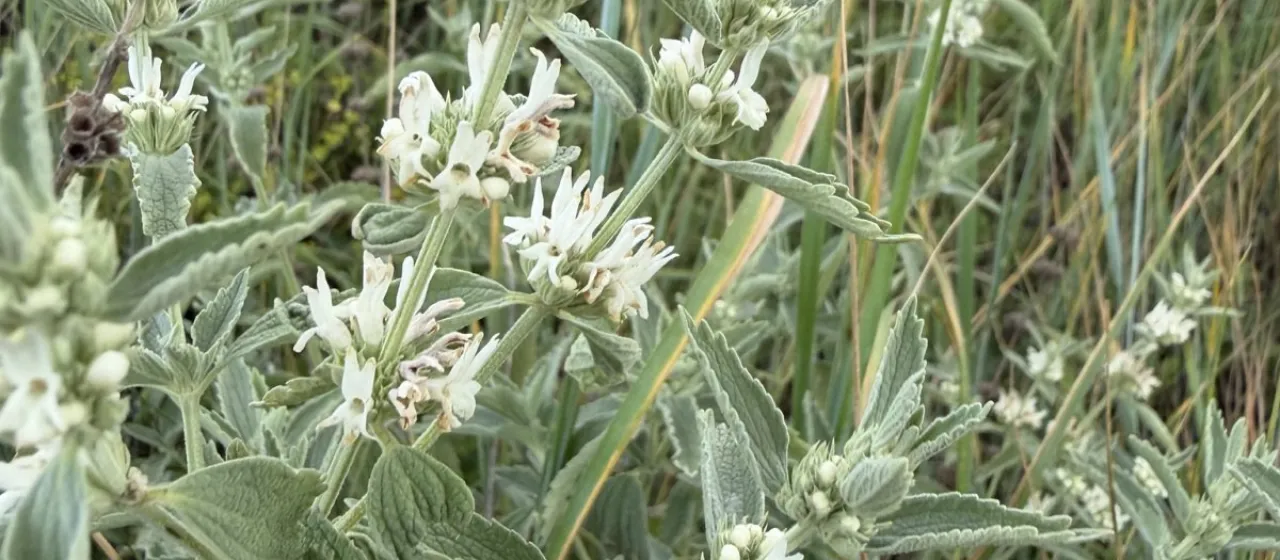
Botanically, the plant features square-shaped stems that reach approximately 40 to 80 centimeters in height. The leaves are wrinkled, dentate, and characterized by a dense, whitish indumentum (hairs), which plays a crucial role in its adaptation to high solar radiation. During the flowering stage, it produces numerous small, white flowers arranged in verticillasters, which are highly attractive to beneficial insects.
From an agricultural standpoint, the plant thrives in well-drained, calcareous soils with high sun exposure. It is highly drought-tolerant, meaning once the root system is established, supplemental irrigation is rarely needed. Agronomic management focuses on controlling weeds during the first year of growth, as the plant is relatively slow to establish in its juvenile stage. Harvesting usually takes place at the beginning of the flowering period to maximize active compound content.
The economic and practical applications of Marrubium peregrinum are diverse:
- Pharmacology: Harvesting aerial parts for bioactive compounds used in traditional medicine.
- Apiculture: Valued as a honey plant, providing nectar during mid-summer.
- Ornamental Horticulture: Often used in xeriscaping due to its silver foliage and drought resistance.
- Sustainable Agriculture: Utilizing the plant for soil erosion control on rocky or poor-quality land.
Like many plants in the Lamiaceae family, Marrubium peregrinum is generally robust, but it can be susceptible to root rot if grown in heavy, waterlogged soils. Common pests include aphids and spider mites, particularly in hot, dry conditions. Integrated pest management (IPM) practices, such as encouraging natural predators, are sufficient to maintain healthy crops without the need for synthetic chemical interventions.