
Description
Martynia annua, widely known as the devil's claw, is a distinct annual herb belonging to the Martyniaceae family. This plant is easily recognized by its unique seed pods, which develop long, curved, woody hooks upon maturity, a trait that gives it its evocative common name and distinguishes it from other annual field crops.
Originating from tropical America, Martynia annua has naturally migrated and been introduced to various tropical and subtropical regions across the globe. It is commonly found in parts of India, Southeast Asia, and Africa, where it has integrated into the local ecosystem as a resilient plant capable of thriving in varied, warm environmental conditions.
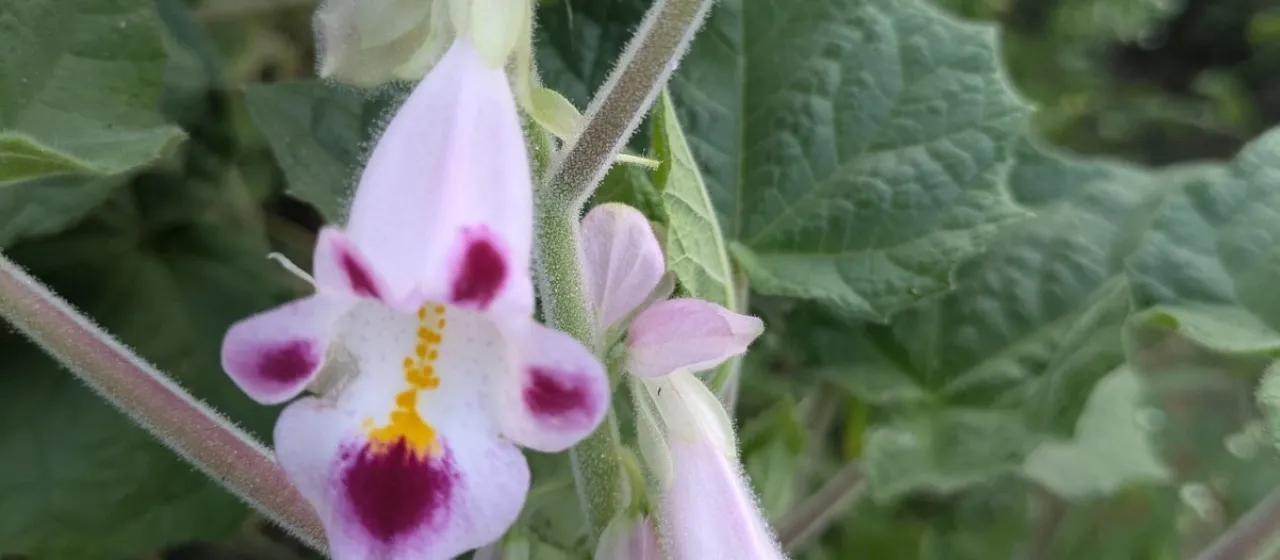
The plant features a robust stem covered in fine, sticky glandular hairs and large, heart-shaped leaves. Its flowers are particularly striking, typically exhibiting shades of pink or purple with spotted throats. The botanical structure is designed to facilitate seed dispersal by attaching the hooked, dried pods to the coats of passing animals, ensuring a wide distribution of seeds.
Cultivation requirements for Martynia annua center on long, hot growing seasons. It prefers well-drained, sandy-loam soils and is highly sensitive to frost.
- Requires full sun exposure for optimal growth.
- Needs consistent moisture during the early vegetative stage.
- Benefits from nutrient-rich soil with balanced organic matter.
In terms of economic use, the plant is primarily valued for its fibrous stems, which are harvested to produce strong cordage. Various parts of the plant, including the seeds and leaves, are frequently utilized in traditional medicinal practices for their chemical properties. While generally hardy, the crop can be susceptible to fungal pathogens if grown in areas with poor drainage and high humidity levels.