
Description
Mascagnia cordifolia is a perennial woody vine belonging to the Malpighiaceae family. In its natural environment, it functions as a vigorous climber, utilizing its flexible stems to ascend over supporting structures and canopy vegetation in tropical ecosystems.
The native distribution of this species spans Central and South America, where it thrives in warm, humid forest environments. It is strictly a tropical to subtropical plant, and its cultivation is successful only in regions where temperatures remain consistently high, as the species lacks cold hardiness and cannot tolerate frost.
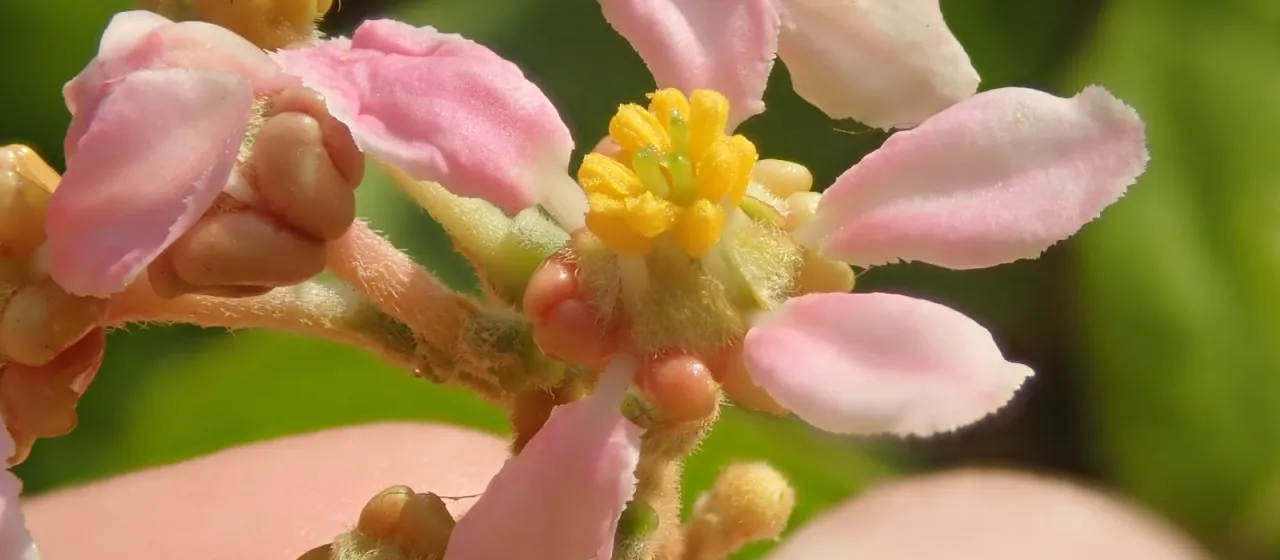
Botanically, the plant is recognized by its heart-shaped (cordate) leaves and its yellow inflorescences. The flowers typically bloom in terminal or axillary clusters, providing significant ornamental appeal. The vine's growth pattern is characterized by rapid development of vegetative biomass, which is typical for the Mascagnia genus.
For optimal growth, Mascagnia cordifolia requires well-draining, nutrient-rich soils. The plant demands a consistent moisture regime; however, it is essential to prevent waterlogging, which can cause root rot. In an agricultural or horticultural setting, it is vital to provide sturdy trellises or supports to facilitate its climbing habit.
The primary use of this culture is in ornamental landscaping, particularly for creating vertical green walls and shaded garden structures in warm climates. While generally robust, the plant can be susceptible to common greenhouse and tropical pests like mealybugs and spider mites. Monitoring and basic integrated pest management are recommended to maintain plant health.