
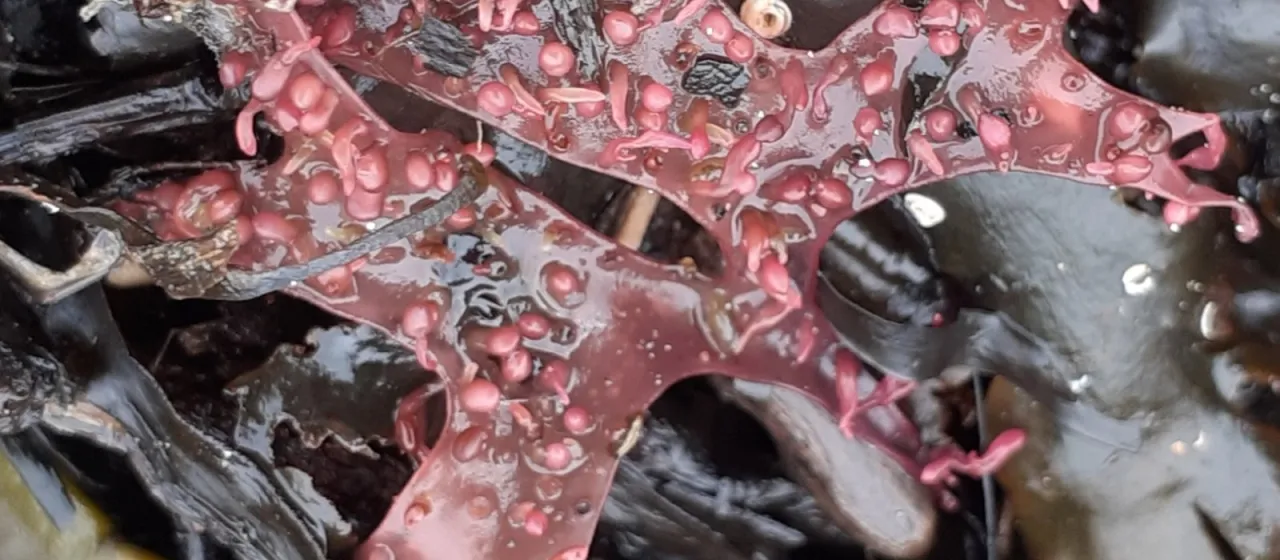
Description
Mastocarpus stellatus is a species of red algae belonging to the Phyllophoraceae family. Widely recognized in the industry as a variation of "Irish moss," this perennial seaweed is harvested extensively across the northern Atlantic coast. It is a highly resilient organism that thrives in challenging intertidal zones, adapting to both terrestrial and aquatic environmental shifts.
The natural range of this species extends from the rocky shores of Northern Europe, particularly Ireland and Scotland, to the coastal regions of North America. It prefers high-energy environments with strong wave action, which facilitates nutrient uptake and gas exchange, essential for its robust growth and the accumulation of complex polysaccharides.
Botanically, the plant consists of a dark, leathery, dichotomously branched thallus. One of its most distinctive features is its complex life history, which involves distinct reproductive stages. This polymorphism allows the species to survive significant environmental stresses, such as high UV exposure during low tide and extreme fluctuations in water salinity.
In terms of cultivation and mariculture, this crop requires minimal intervention. Success depends on selecting rocky substrates with clear, nutrient-rich water. Unlike traditional terrestrial crops, there is no need for soil preparation or synthetic fertilizers; however, monitoring water quality and managing harvest cycles are essential to maintain the productivity of the colony.
Economically, this seaweed is a critical source of carrageenan, a phycocolloid used globally as a stabilizer and thickening agent in food, pharmaceutical, and cosmetic products. Its nutritional profile, rich in essential minerals like iodine and magnesium, also makes it a valuable additive for animal feed and organic agricultural enrichment products.
Common challenges and risks for the species include:
- Biofouling by invasive epiphytic species.
- Impact of ocean acidification on cell wall structure.
- Heavy metal accumulation from industrial runoff.
- Over-harvesting resulting in the depletion of natural beds.