
Description
Maurocenia frangula, commonly known as the Hottentot cherry, is a robust, evergreen shrub or small tree belonging to the Celastraceae family. It is highly valued for its dense, glossy foliage and its resilient nature, making it a distinctive component of Mediterranean and coastal garden designs.
The plant originates from the southern regions of South Africa, specifically the Cape provinces. In its native habitat, it thrives in rocky environments and scrublands, demonstrating an impressive evolutionary ability to withstand nutrient-poor soils and sporadic water availability, which is crucial for its survival.
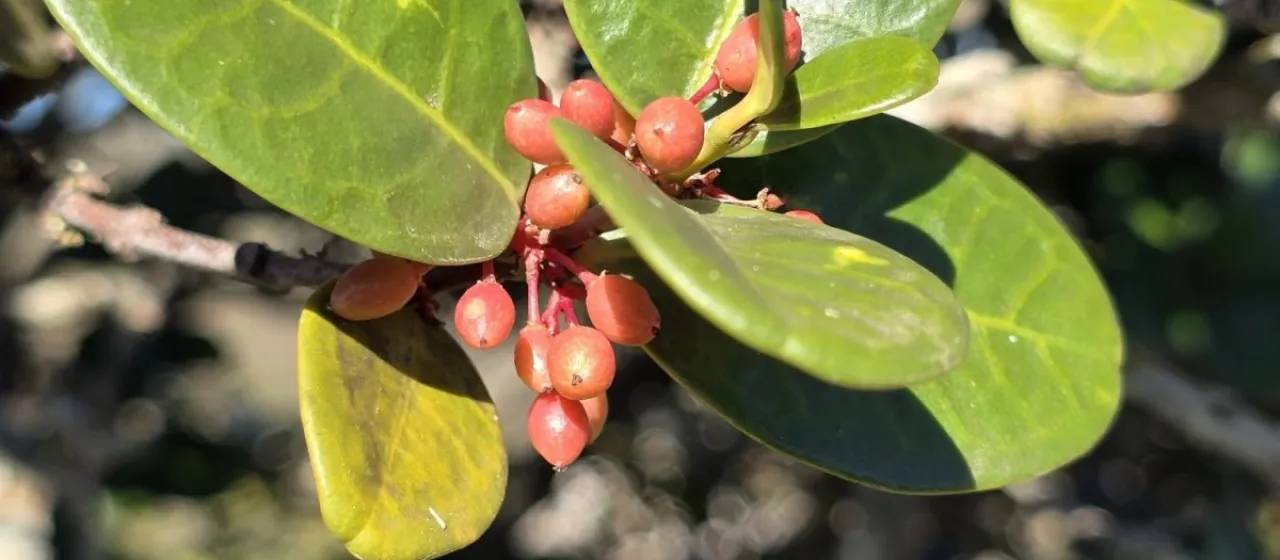
Botanically, the species is characterized by thick, leathery, dark green leaves and small, inconspicuous flowers that bloom in clusters. The subsequent fruit production adds aesthetic value, as the ripening berries transition into a deep, dark purple color, providing food for local bird species in natural settings.
Cultivation requirements involve full sun to partial shade and a well-draining soil substrate. While the plant is drought-tolerant once established, supplemental irrigation during extreme heatwaves is beneficial for optimal growth. It is relatively low-maintenance, requiring only occasional pruning to maintain a tidy structure or to encourage denser foliage growth.
Regarding health management, Maurocenia frangula is generally resistant to most pests; however, growers should remain vigilant for common garden pests such as scale insects or spider mites, especially in confined or poorly ventilated conditions. Root rot, induced by waterlogged soil, remains the most significant threat, highlighting the necessity of proper drainage in all agricultural or landscape applications.