
Description
Mecardonia dianthera is a low-growing, perennial herbaceous plant belonging to the Plantaginaceae family. Known for its ability to form a dense, lush green carpet covered with tiny, vibrant yellow flowers, this plant has become a favorite among professional landscapers and garden enthusiasts for its long blooming period and compact growth habit.
Originating from the Americas, the plant naturally thrives in moist environments, such as riverbanks and wetlands. Today, it is widely cultivated across various regions as an ornamental ground cover or trailing plant. Its adaptability allows it to perform exceptionally well in both ground beds and hanging baskets, provided the environmental conditions meet its moisture requirements.
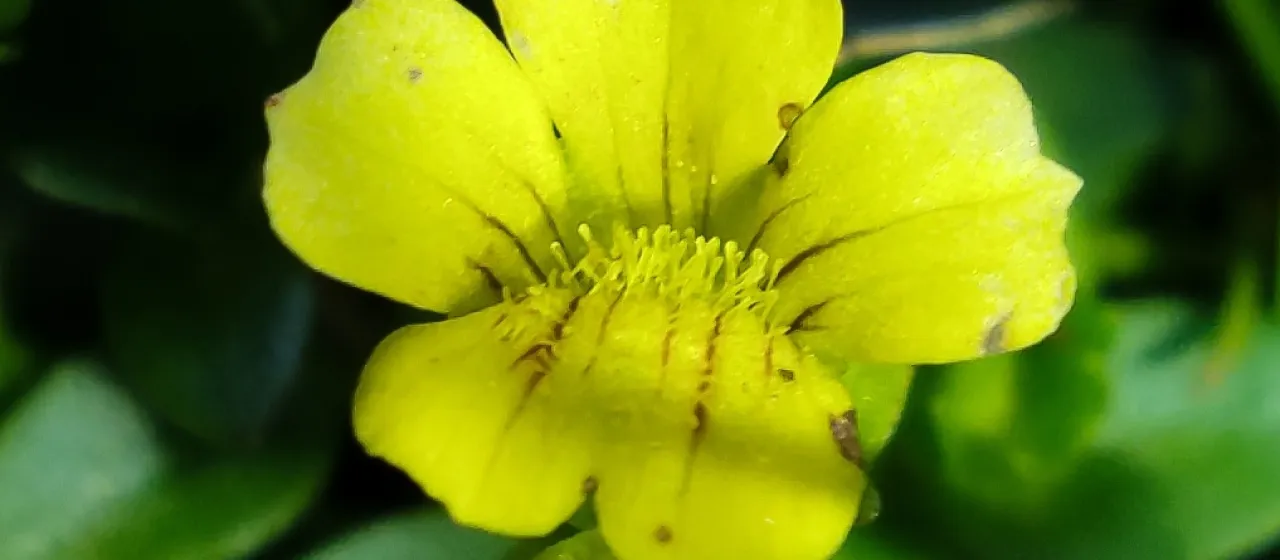
Botanically, Mecardonia dianthera is characterized by its prostrate stems that root easily at the nodes when in contact with moist soil. The foliage consists of opposite, lance-shaped leaves with serrated margins. The yellow flowers are distinctively bright, featuring five petals, and are produced continuously from late spring until the first heavy frosts, creating a constant display of color.
Successful cultivation of this species requires a location with full sun to partial shade and a soil mix that retains moisture while offering good drainage. Because the plant is highly sensitive to drought, regular and deep watering is essential for maintaining its vigor. Fertilization with a balanced liquid feed during the active growth phase encourages more profuse flowering and denser foliage.
- Watering: High demand, must not dry out.
- Soil requirements: Humus-rich, well-draining substrate.
- Propagation: Stem cuttings or division.
- Hardiness: Tender, usually grown as an annual in temperate climates.
In landscaping, Mecardonia is effectively used as a filler plant for containers, as a ground cover in sunny borders, or as a softening element around hardscaping features. While generally robust, it can be susceptible to pests such as aphids or spider mites, particularly under stress. Maintaining proper air circulation and monitoring soil moisture are the best cultural practices for disease prevention and ensuring the plant remains healthy throughout the season.