
Description
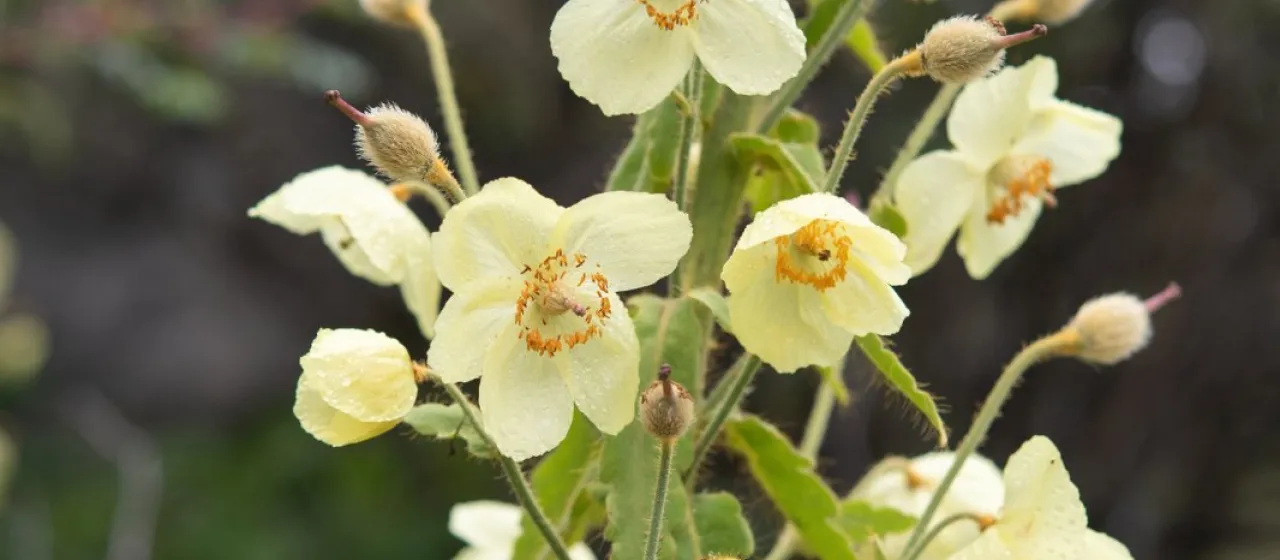
Meconopsis paniculata, commonly known as the Golden Himalayan Poppy, is a striking herbaceous perennial belonging to the Poppy family (Papaveraceae). It is highly prized by horticulturists for its majestic appearance, particularly the fine golden hairs that cover its foliage and stems.
The plant originates from the high-altitude regions of the Himalayas, spanning countries like Nepal and Bhutan. It thrives in alpine meadows and rocky slopes at elevations ranging from 3,000 to 5,000 meters, where it is accustomed to cool, humid air and well-aerated, rocky soils.
Botanically, it is a monocarpic species, meaning it grows as a leaf rosette for a few years before producing a single, dramatic flowering stalk. Once the plant sets seed, it typically dies back. The flowers appear in panicles and are characterized by their delicate, saucer-shaped petals that shimmer in shades of yellow and gold.
Cultivation requires strict adherence to environmental conditions. It demands a cool, moist climate with protection from intense summer heat. The soil must be rich in organic matter, slightly acidic, and exceptionally well-drained. Inadequate drainage is the leading cause of failure, often leading to crown rot during winter months.
The primary use for this species is ornamental, often serving as a centerpiece in rock gardens, woodland borders, or specialist alpine collections. When cultivated, growers must be vigilant against pests such as aphids and slugs, while ensuring that humidity levels remain optimal to prevent fungal infections of the sensitive root system.