
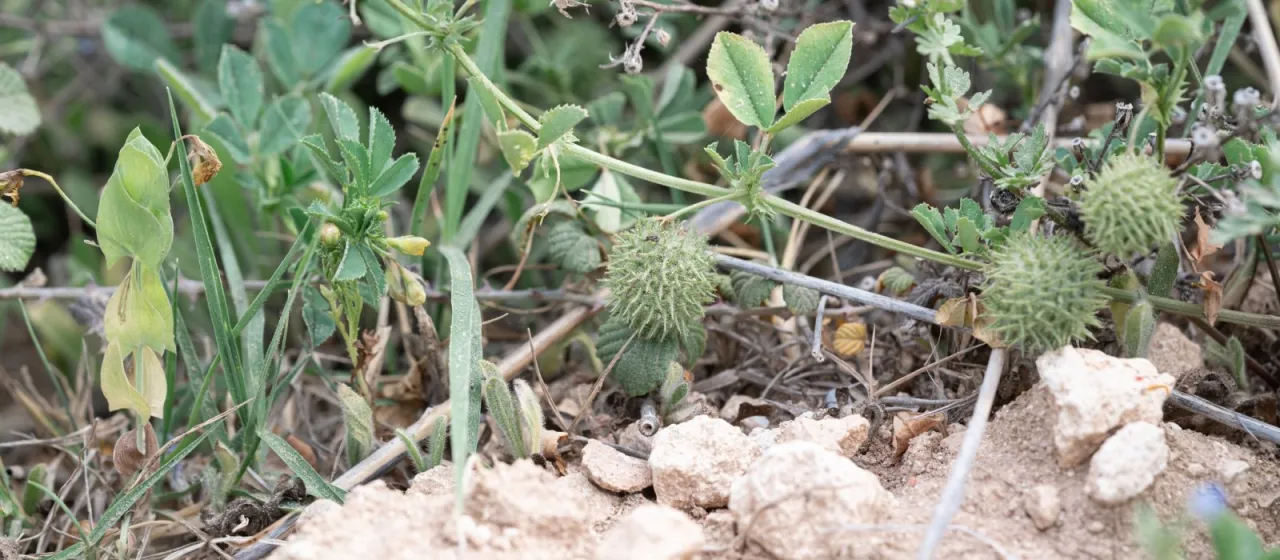
Description
Ciliate medic (Medicago ciliaris) is an annual herb belonging to the Fabaceae family. It is a member of the diverse Medicago genus, distinguished by its unique fruit morphology, specifically the ciliate (hairy) margins on its pods. As a leguminous crop, it possesses the ecological ability to form symbiotic relationships with nitrogen-fixing bacteria, which contributes significantly to soil fertility improvement in pasture systems.
The native range of Medicago ciliaris spans across the Mediterranean Basin, North Africa, and parts of Southwest Asia. It is well-adapted to semi-arid climates, thriving in open pastures, slopes, and fallow fields. Its evolutionary development in these regions has equipped the plant with high tolerance to intermittent drought and high temperatures, making it a reliable crop for dryland agriculture.
Botanically, the plant presents as a trailing or semi-erect herb with trifoliate leaves. The flowers are typically yellow and arranged in compact racemes. A distinct biological feature is its spiral-shaped pod, which is covered in stiff bristles or cilia, an adaptation designed for animal dispersal. The plant develops a deep taproot system, which helps it access subsoil moisture during periods of surface water shortage.
Agricultural success with ciliate medic relies on proper soil preparation and timing. It prefers well-drained, alkaline to neutral soils. In terms of cultivation:
- Sowing should occur during the cooler, moist season to ensure proper establishment.
- The plant requires adequate space between rows to reduce competition for light.
- Phosphorus application significantly boosts biomass yield and nodule activity.
- Minimal tillage techniques are often preferred to preserve soil structure.
In practice, Medicago ciliaris is primarily used for forage and pasture improvement, providing a protein-rich feed source for ruminants. It is a resilient crop, but it remains susceptible to typical legume pests such as weevils (Sitona species) and certain fungal diseases like powdery mildew in humid, poorly ventilated conditions. Integrated pest management strategies are crucial for maintaining long-term productivity of the stand.