
Description
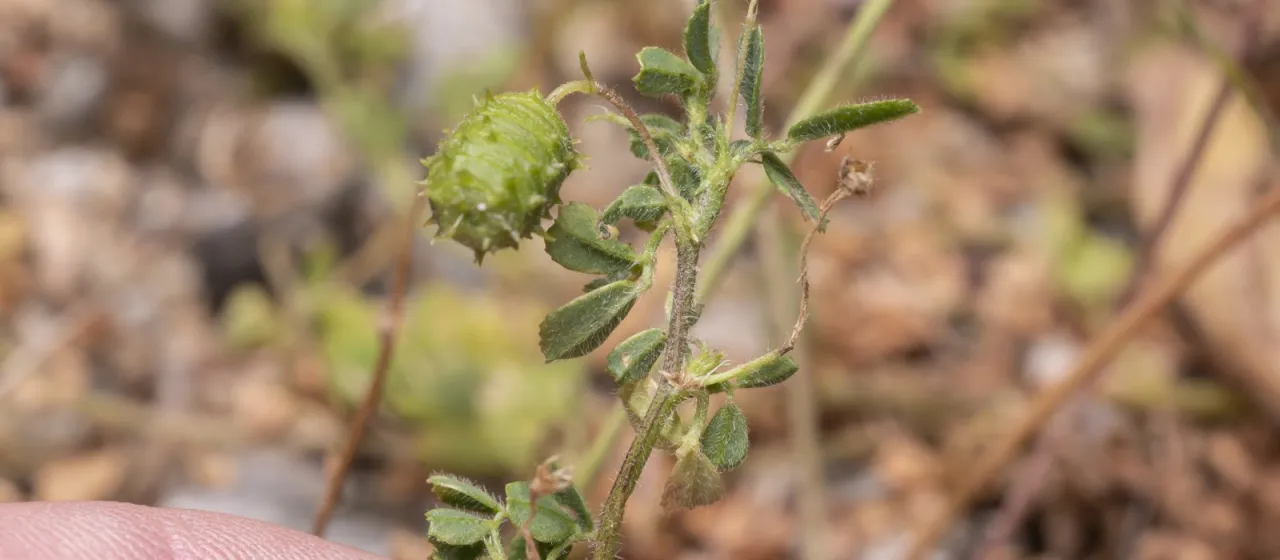
Medicago constricta is an annual herbaceous plant species within the Fabaceae family. As a member of the Medicago genus, it is recognized for its ability to thrive in harsh environments and its contribution to soil health through nitrogen fixation. This plant represents a significant botanical asset in arid ecosystems.
The native range of Medicago constricta spans across the Mediterranean basin and parts of Western Asia. It is naturally adapted to dry, semi-arid habitats, where it has evolved to complete its life cycle during short windows of moisture availability. Its resilience makes it a subject of interest for sustainable agriculture in water-scarce regions.
Botanically, the species is identified by its trifoliate leaves and its distinctive coiled fruit pods, which are characteristic of many medics. The root system is robust, providing the plant with the ability to access deep-seated moisture. The flowers are typically yellow and small, serving as a food source for various pollinating insects.
In terms of cultivation, Medicago constricta demands well-drained soils, often thriving in rocky or sandy substrates. It requires high solar radiation and is highly sensitive to waterlogging. Effective agro-management involves selecting sites that mimic its natural habitat to ensure healthy development and optimal dry matter yield.
- Exceptional tolerance to drought conditions.
- Contribution to soil fertility through nitrogen fixing.
- High nutritional quality for grazing livestock.
- Potential for breeding programs focused on climate resilience.
The primary use of this crop is within pastoral systems, where it provides essential forage for grazing animals. While generally hardy, the plant can be susceptible to common legume pathogens, such as fungal leaf spots and aphids, especially if atmospheric humidity remains high for extended periods. Integrated pest management strategies are generally recommended to preserve the stand.