
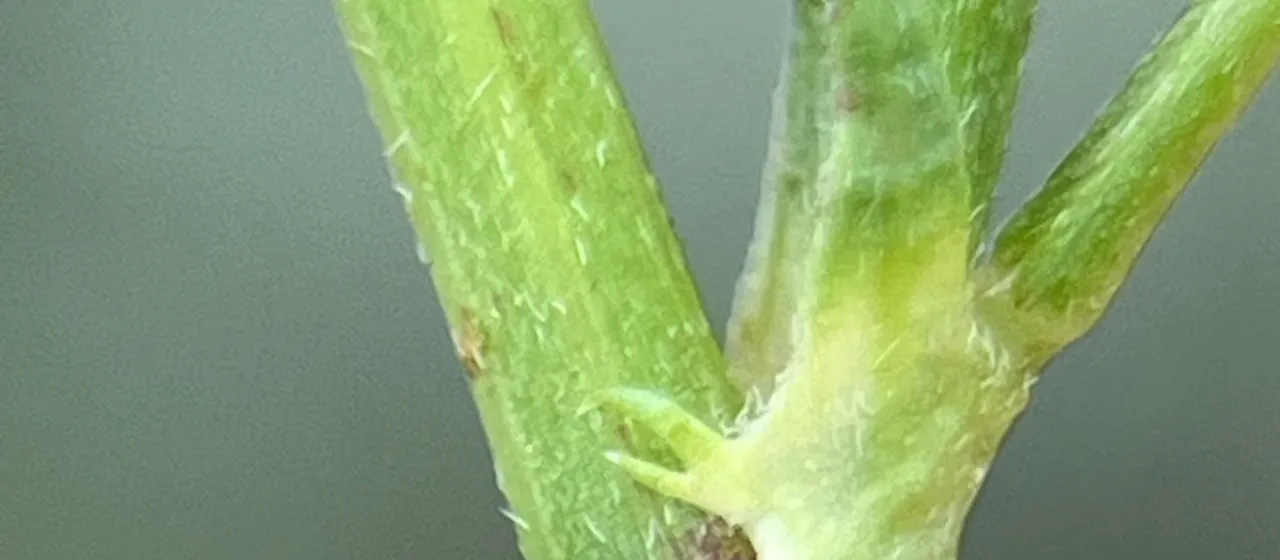
Description
Toothed medick (Medicago dentata) is an annual herbaceous plant belonging to the Fabaceae family. While it is not a primary crop for intensive farming, it serves as an important component of natural rangelands and contributes to soil fertility in arid and semi-arid Mediterranean climates.
The native range of this species includes the Mediterranean basin, Southern Europe, and North Africa. It is adapted to diverse environments, frequently colonizing rocky slopes, stony soils, and grasslands where competition for moisture is intense. Its presence is indicative of areas with well-drained, alkaline, or calcareous soils.
Botanically, Medicago dentata is characterized by its distinctive pods, which feature prominent marginal teeth, a trait that gives the species its common name. The plant exhibits a prostrate or ascending growth habit, trifoliate leaves, and yellow inflorescences. Its deep root system is highly efficient at water extraction, allowing it to thrive in nutrient-poor substrates.
In terms of agricultural management, the plant requires minimal input if used for pasture improvement. It is a nitrogen-fixing legume, which improves soil nitrogen levels and overall structure. It thrives in locations with full sun exposure and is highly resistant to drought, though it is sensitive to waterlogging, which can cause root decay.
- Requires well-drained soils.
- Excellent for soil nitrogen fixation.
- Suitable for dryland forage improvement.
Regarding pests and diseases, the plant is susceptible to common legume pathogens such as powdery mildew, rust, and various leaf spots. Entomological threats include aphids, which may colonize the stems during peak spring growth, and several species of weevils that can impact seed production if not managed in intensive conditions.