
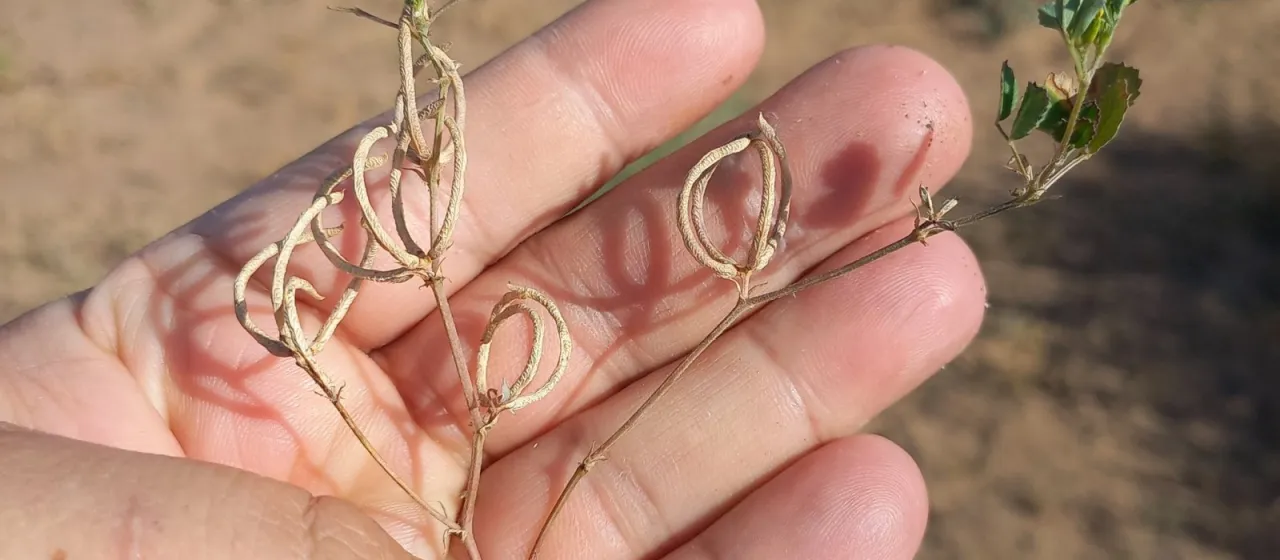
Description
Small-leaved alfalfa (Medicago medicaginoides) is a perennial herbaceous plant belonging to the Fabaceae family. As a hardy member of the alfalfa genus, it is increasingly recognized in agricultural circles for its resilience and ability to thrive in environments where traditional forage crops might struggle.
Originating from Mediterranean and Asian regions, this plant has adapted to diverse soil types and varying moisture levels. Its natural distribution highlights its success in semi-arid environments, making it a valuable candidate for restoration projects and sustainable farming in regions prone to seasonal droughts.
From a botanical perspective, the plant is characterized by thin stems and small leaflets, which provide a dense canopy that shades the ground and retains soil moisture. The root system is deep and efficient at extracting nutrients, contributing significantly to soil health by fixing atmospheric nitrogen into the ground.
The agronomic requirements for Medicago medicaginoides are relatively straightforward. It prefers well-drained, porous soils with a neutral pH. The cultivation cycle requires minimal irrigation once the plant is established, as its physiological traits are geared toward survival in challenging climates. Standard agricultural practices include periodic mowing to stimulate regrowth.
In terms of agricultural utility, it serves as an excellent source of high-protein forage for livestock. It is often harvested for hay or used as part of pasture improvement programs. While it is generally resistant to many common legume pests and fungal diseases, good crop rotation practices remain essential to maintaining yield quality.
- High drought tolerance
- Excellent soil nitrogen fixation
- Nutrient-rich forage for livestock
- Low maintenance requirements