
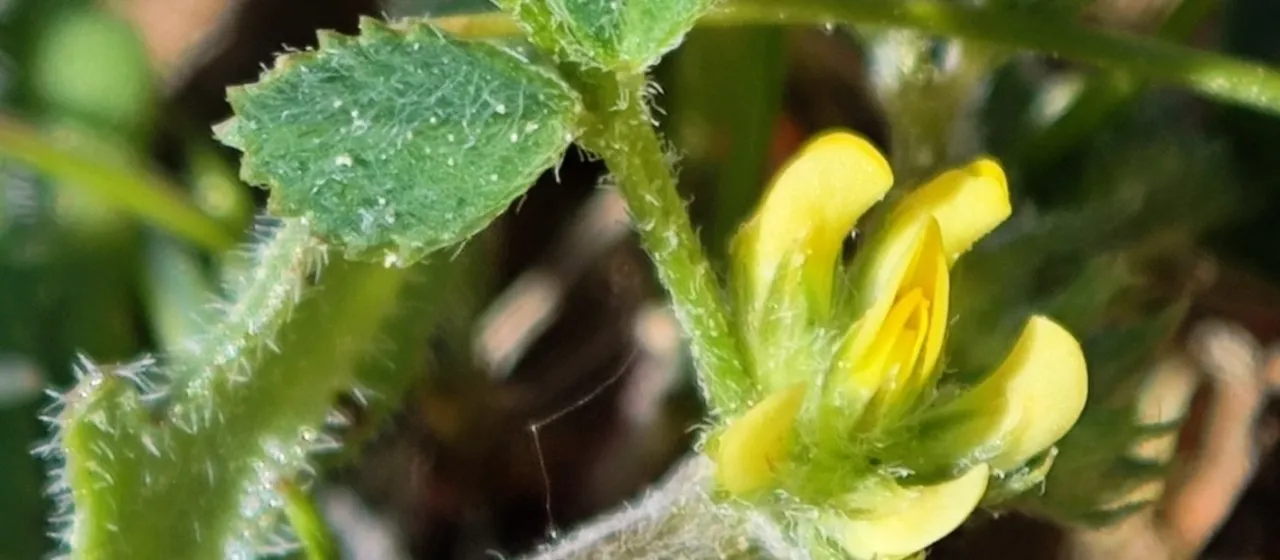
Description
Montpellier medick (Medicago monspeliaca), formally known in older classifications as Trigonella monspeliaca, is an annual leguminous herb belonging to the Fabaceae family. It is a resilient plant species known for its adaptability to harsh environments and its potential role in grazing systems and soil management.
The species originates from the Mediterranean basin, with its natural range extending across Southern Europe, North Africa, and parts of Western and Central Asia. It typically thrives in open, sunny habitats, including dry meadows, rocky slopes, and sandy soils, demonstrating remarkable tolerance to low-moisture conditions.
Botanically, this plant is characterized by its prostrate or ascending stems, trifoliate leaves with serrated margins, and clusters of small yellow flowers. The pods are distinctly curved or spiraled, which serves as a definitive characteristic for identifying this specific plant within the broader genus.
In terms of cultivation, Montpellier medick prefers well-drained soils with a neutral or slightly alkaline pH. Proper agricultural practice involves sowing during the optimal spring period to ensure deep root establishment. Farmers should prioritize minimal tillage to preserve soil structure, as the plant is efficient in nitrogen fixation and does not require intensive fertilization.
- Suitable for dryland pasture improvement.
- Effective as a green manure for soil nitrogen enrichment.
- Requires well-drained environments to prevent fungal root issues.
- Can be impacted by common legume pests like weevils.
The crop is primarily utilized as forage for livestock due to its nutritional profile, though it is also valuable for its contribution to soil health. Disease management focuses on controlling powdery mildew, while pest control strategies are directed toward protecting the foliage from larval feeding during the early stages of plant development.