
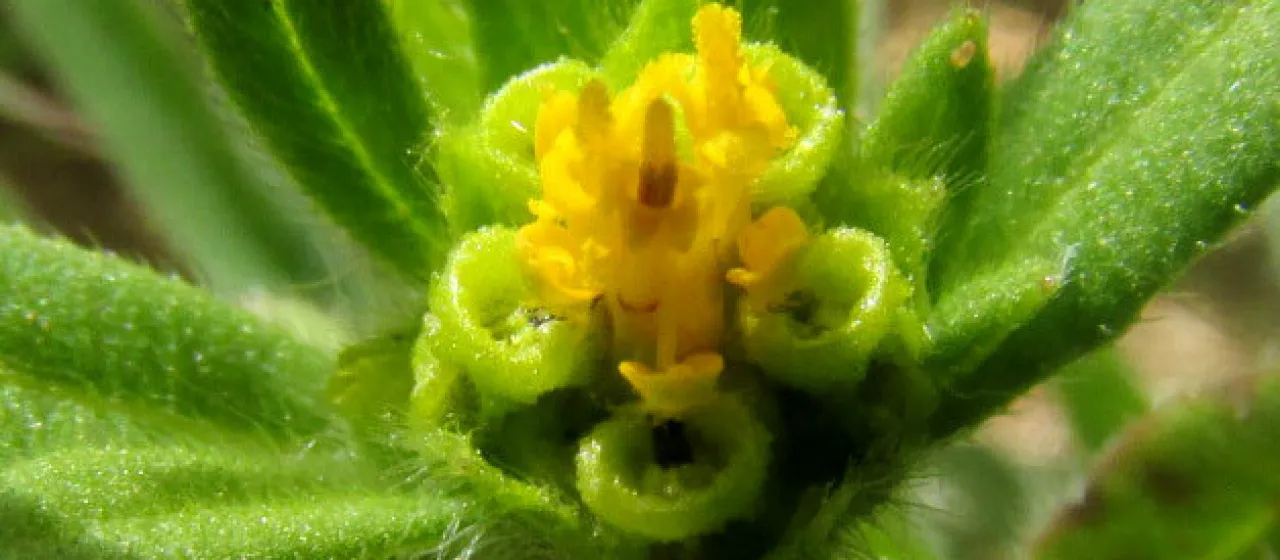
Description
Melampodium hispidum is a herbaceous plant belonging to the Asteraceae family. Known for its distinctively textured foliage and bright, daisy-like yellow flowers, this species is increasingly valued in ornamental agriculture for its resilience, compact growth habit, and continuous blooming throughout the warmer months.
The plant originates from regions in North and Central America, where it thrives in open, sunny habitats. Its natural adaptation to semi-arid environments makes it an excellent candidate for landscape restoration and decorative gardening in areas prone to heat stress and low rainfall.
Botanically, the plant is characterized by its hispid (bristly) stems and leaves, which provide a robust defense against various environmental stresses. It typically grows as a branching, low-spreading mound, effectively covering the ground and maintaining a neat appearance without the need for constant pruning or trimming.
Cultivation requirements for this crop focus on well-draining soil and full sun exposure. It is highly intolerant of waterlogged conditions, which can lead to root rot. Therefore, light, sandy or loamy soils are ideal. While the plant is drought-tolerant, supplemental irrigation during prolonged dry spells will significantly improve flower production and overall plant vigor.
The primary use of Melampodium hispidum is in professional landscaping, particularly for borders, flower beds, and container planting. It is generally resistant to most common garden pests, though growers should monitor for signs of fungal issues in overly humid conditions.
- Requires full sunlight for optimal flowering
- Needs well-drained, porous soil structure
- Excellent for low-maintenance garden designs
- Natural resistance to heat and pests