Field cow-wheat
Melampyrum arvense L.
Description
Field cow-wheat (Melampyrum arvense L.) is an annual herbaceous plant belonging to the broomrape family (Orobanchaceae). As a facultative hemiparasite, it possesses green foliage and conducts photosynthesis; however, it supplements its nutrient requirements by attaching to the roots of host plants, typically grasses and various wildflowers, using specialized structures known as haustoria.
The native range of this species spans across Europe, the Caucasus, and parts of Western Asia. Historically, it was widely distributed throughout traditional agricultural regions where it thrived in field margins and cereal fields. Today, it is recognized as a plant that favors lime-rich, nutrient-stable soils and open environments with high light intensity, which often leads to its presence in disturbed agricultural landscapes.
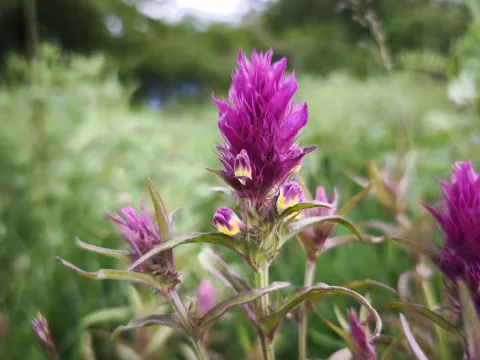
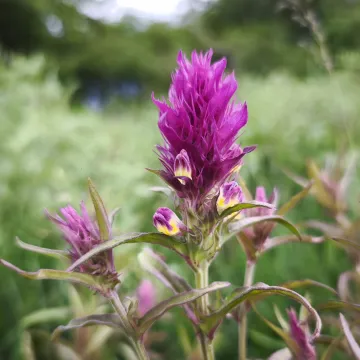
Botanically, the plant is characterized by a branched stem that can grow up to 50 cm in height. Its most distinctive feature is the dense, spike-like inflorescence protected by colorful, often pink or deep purple, bracts that give the plant a vivid appearance during its flowering season in early-to-mid summer. These aesthetic qualities occasionally mask its underlying nature as a competitive agricultural weed.
Agronomic management of this species is centered on preventative measures, as it is not a commercially cultivated crop. Standard practices include the use of clean seeds free from weed contamination, crop rotation to break the parasitic cycle, and tillage operations that disrupt the weed's development. Effective management requires identifying the plant early, as its seed production can lead to persistent soil seed banks.
While the field cow-wheat is not typically a crop, it supports a range of biodiversity, providing nectar for various pollinators. Conversely, it faces pressure from fungal pathogens that may cause foliar spotting, and it is host to specific insect species. In contemporary agriculture, it is managed as a minor pest, though in some European countries, it is protected in natural meadows due to its declining populations in non-agricultural habitats.
Photo gallery