
Description
Crested cow-wheat (lat. Melampyrum cristatum) is an annual herbaceous plant belonging to the Orobanchaceae family. It is recognized as a facultative root hemiparasite, meaning it can perform photosynthesis independently but obtains water and nutrients by attaching its roots to those of neighboring host plants.
The plant originates from the temperate regions of Europe and Western Asia. In agricultural contexts, it is often treated as a problematic weed. Its presence is frequently observed in fields of winter cereals, permanent grasslands, and forest margins. It thrives in habitats where soil conditions allow for easy root contact with grasses and various dicotyledonous species.
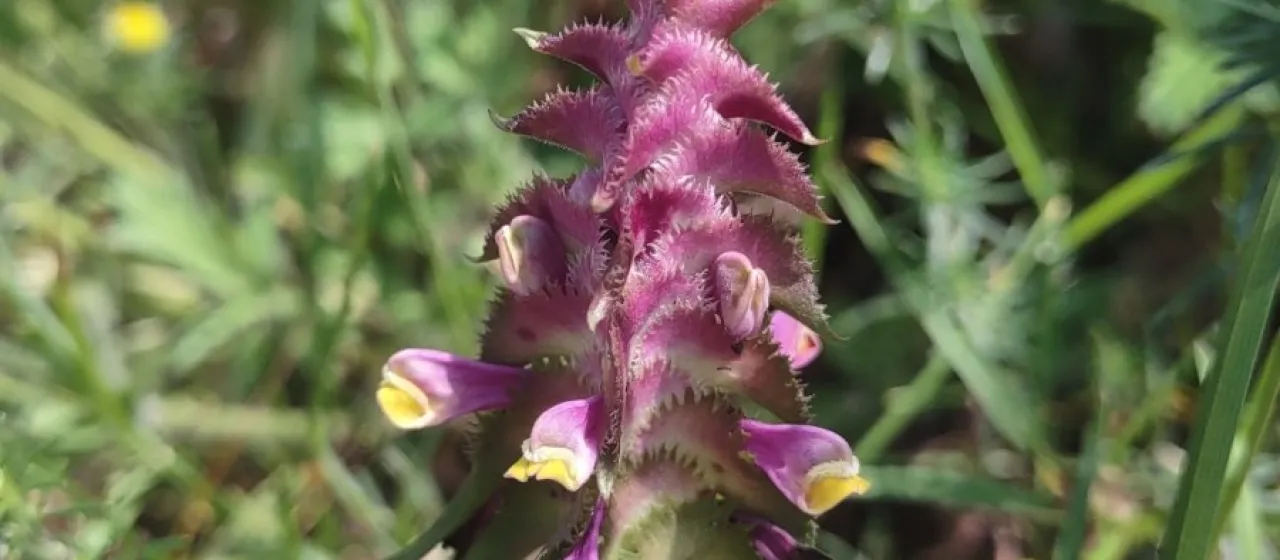
Botanically, it is identified by a square, branched stem that grows to a height of 15–50 cm. The most distinguishing feature is the dense, tetragonal inflorescence, where the bracts are notably comb-like (cristate) and often tinged with purple or deep red shades. These bracts provide protection to the small, yellow-and-white flowers that bloom from June through September.
Crested cow-wheat prefers light-exposed areas with well-drained, nutrient-rich soils. It does not tolerate high levels of nitrogen fertilization as well as some other weeds, which sometimes limits its spread in intensive farming. However, its resilience in marginal soils makes it a consistent inhabitant of non-intensive agricultural lands and neglected meadows.
While the plant is generally viewed as an agricultural pest due to its parasitic nature and the toxicity of its seeds to livestock, it serves a role in biodiversity as a nectar source for bees and various pollinators. Effective management in fields requires specific agronomic practices to reduce seed bank accumulation:
- Implementing crop rotation to break the parasitic cycle.
- Early mechanical weeding before seed dispersal occurs.
- Ensuring the use of high-quality, weed-free grain seeds.
- Managing field margins to reduce the influx of seeds from surrounding areas.