
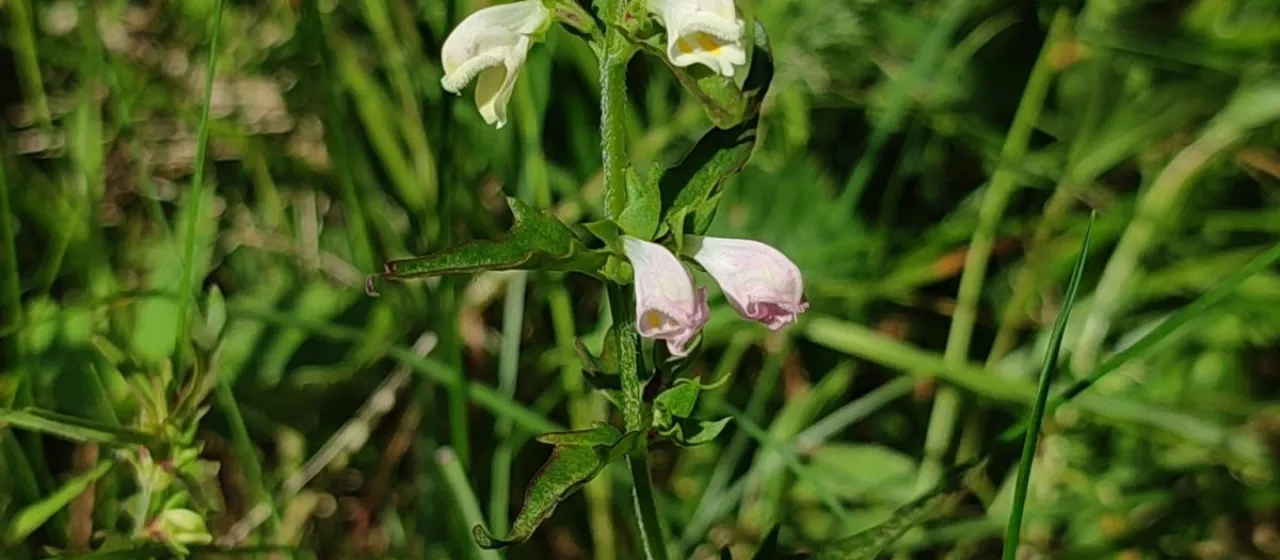
Description
Herbich's cow-wheat (Melampyrum herbichii) is an annual herbaceous plant classified within the Orobanchaceae family. Similar to other species in the genus Melampyrum, it is characterized by a hemiparasitic lifestyle, meaning it possesses chlorophyll to perform photosynthesis but relies on host plants via root connections to obtain water and mineral nutrients.
The geographic range of this species is primarily located in the mountainous regions of Eastern Europe, particularly the Carpathians. It typically inhabits forest margins, subalpine meadows, and shrublands. The plant is well-adapted to cool, humid environments and demonstrates a preference for soils with specific microflora and associated host plant species.
Botanically, Herbich's cow-wheat displays a typical structure with opposite, lanceolate leaves and a spike-like inflorescence. Its flowers are usually zygomorphic and exhibit a vibrant color that attracts pollinators. The reproductive strategy relies on the efficient production of seeds that are dispersed in the late summer, ensuring the continuation of the annual life cycle.
From an agronomic perspective, this plant is not a commercial crop and is not suitable for mass cultivation. Due to its hemiparasitic nature, maintaining a population requires the presence of stable, diverse vegetation. Any attempt to cultivate the plant requires recreating the complex natural ecosystem, including the appropriate soil acidity and the specific plant-host partners.
There is no traditional хозяйственное (economic) use for this species in agriculture. It is of interest primarily to botanists and ecologists studying plant-parasite interactions. Typical threats to the species include habitat degradation, climate change, and agricultural intensification. Common phytopathological issues involve fungal infections related to excessive humidity and competition with invasive weed species.