
Description
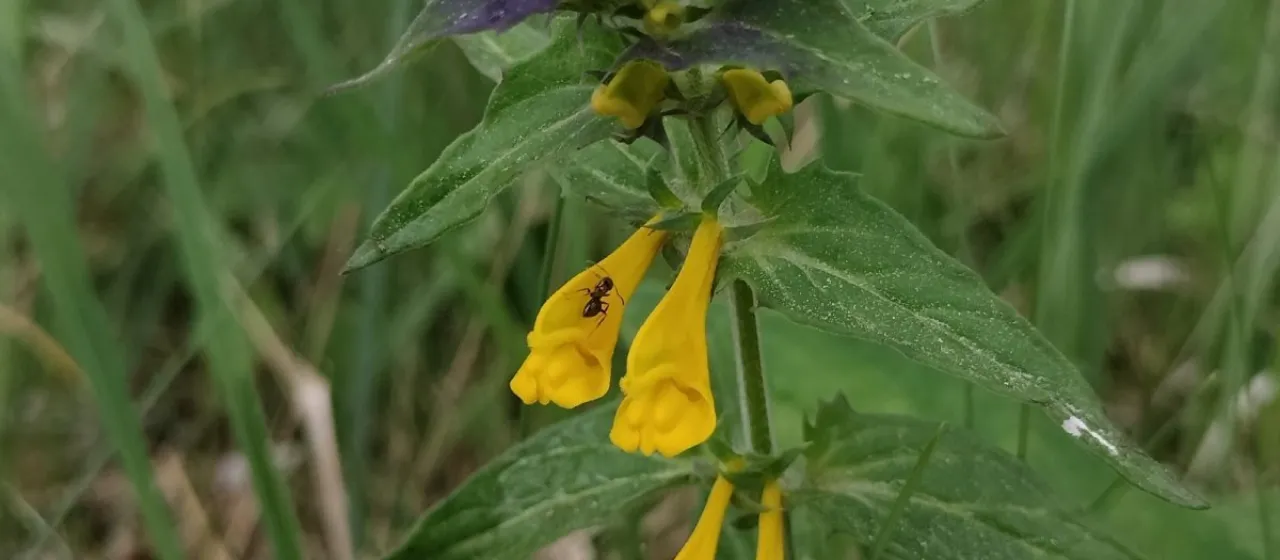
Wood cow-wheat (lat. Melampyrum nemorosum) is an annual herbaceous plant belonging to the Orobanchaceae family. Commonly referred to as «Ivan-da-Marya» in many regions, it is distinguished by its unique bicoloured appearance, featuring bright yellow flowers set against deep purple-blue bracts.
The biological nature of this plant is classified as a hemiparasite. Unlike true parasites, it contains chlorophyll and is capable of photosynthesis. However, it relies on attaching its roots to the root systems of neighboring plants via haustoria to supplement its nutrient uptake, particularly water and mineral salts, which significantly boosts its growth in nutrient-poor soils.
The plant thrives in temperate climates, showing a preference for deciduous forest edges, woodland clearings, and moist, nutrient-rich meadows. It requires high light intensity and is generally sensitive to competition from dense, aggressive ground vegetation. In terms of soil, it prefers neutral or slightly acidic compositions with moderate moisture retention.
Economically, wood cow-wheat is often regarded as a noxious weed in hay meadows. It contains aucubin, a toxic glycoside that can be harmful to livestock if ingested in significant quantities. While it is rarely cultivated as a primary crop, its role in biodiversity and its ecological interaction with other plant species make it a subject of interest in environmental botany.
Management and plant health considerations include:
- Susceptibility to various fungal pathogens under high humidity conditions.
- Infestation by aphids and other sap-sucking insects during the flowering stage.
- Challenges in mechanical control due to the plant's ability to quickly re-establish via seed dispersal in favorable habitats.