
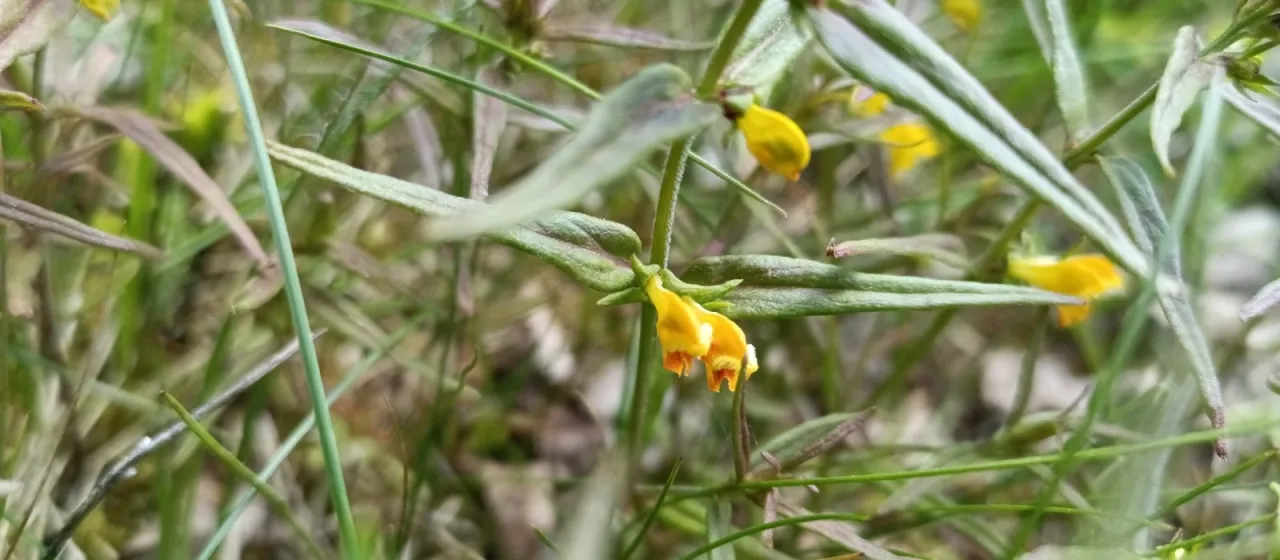
Description
Small cow-wheat (Melampyrum sylvaticum) is an annual herbaceous plant belonging to the Orobanchaceae family. While it is not considered a traditional agricultural crop, it is a significant species in forest botany and plant physiology due to its unique hemiparasitic lifestyle.
The plant is native to the temperate regions of Europe and parts of Asia. It thrives in coniferous and deciduous forests, typically occupying shaded, nutrient-rich, and slightly acidic soils. Its distribution is closely linked to the availability of suitable host plants required for its development.
Botanically, it features a slender stem reaching 15–30 cm in height with opposite, narrow leaves. The most striking features are its small, tubular, yellow flowers. The root system is specialized, featuring haustoria that penetrate the roots of nearby grasses or shrubs to absorb water and nutrients.
Regarding agricultural management, the species does not require cultivation techniques. Its hemiparasitic nature makes it unsuitable for standard farming practices. In experimental conditions, growth is dependent on host presence, which prevents its domestication as a commercial forage or medicinal crop.
The plant contains iridoid glycosides, such as aucubin, which can be toxic to livestock if ingested in large quantities. Consequently, there are no established practices for managing this plant as a crop, and it is largely considered a wild flora component that rarely poses threats to major agricultural systems.