
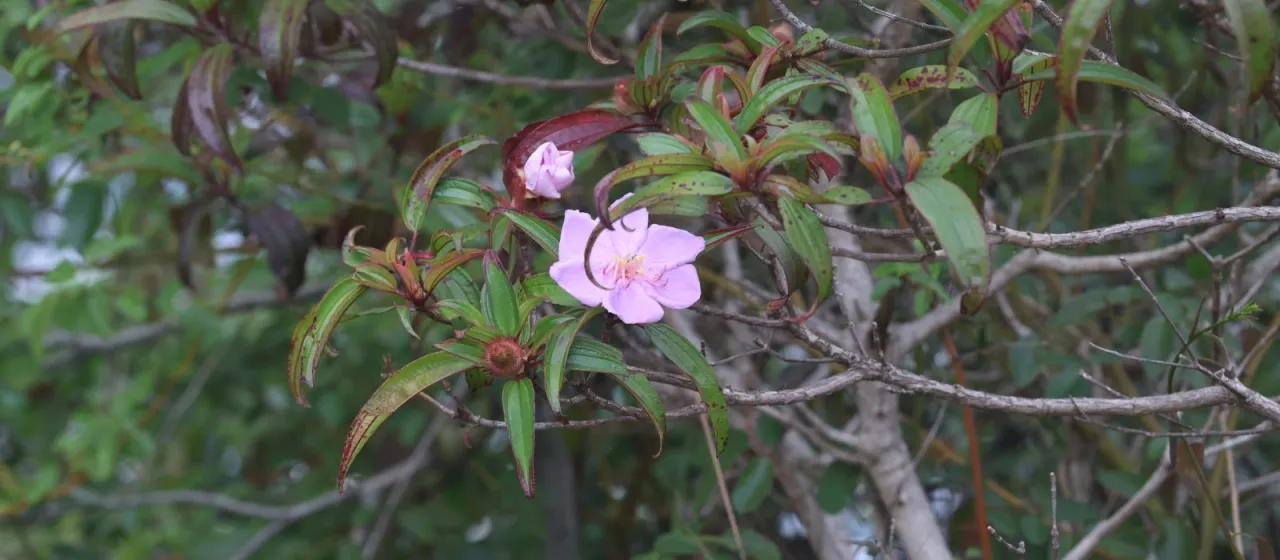
Description
Melastoma sanguineum is a robust evergreen shrub belonging to the family Melastomataceae. It is highly regarded in tropical horticulture for its vibrant, large purple-pink flowers and its distinctive foliage, which features prominent longitudinal veins on the leaf surface.
The species is native to the tropical regions of Southeast Asia. It typically thrives in the understory of forests and on moist, open mountain slopes. Due to its adaptation to warm, humid environments, it is primarily cultivated as an ornamental plant in botanical gardens, specialized greenhouses, and tropical landscaping projects.
Botanically, the plant is characterized by its woody stems and opposite leaves that are often covered with fine hairs. The flowers are typically arranged in terminal clusters and are notable for their showy petals and stamens. After the flowering period, the plant produces berry-like capsules that contain numerous tiny seeds, facilitating natural propagation.
The agronomy of Melastoma sanguineum requires specific attention to soil acidity. The plant is calcifuge and performs best in acidic, well-draining, nutrient-rich soil. Irrigation must be managed carefully using soft or rainwater, as mineral buildup from tap water can lead to nutrient deficiencies and leaf chlorosis. Consistent temperatures and high humidity are essential for healthy development.
Economically, this plant serves as a high-value ornamental crop for nursery production and garden design. Proper management is necessary to avoid common agricultural challenges, which include:
- Infestations of spider mites in low-humidity environments.
- Root rot caused by poorly drained soil or waterlogging.
- Nutrient deficiencies, specifically iron or magnesium, which impact foliage color.