
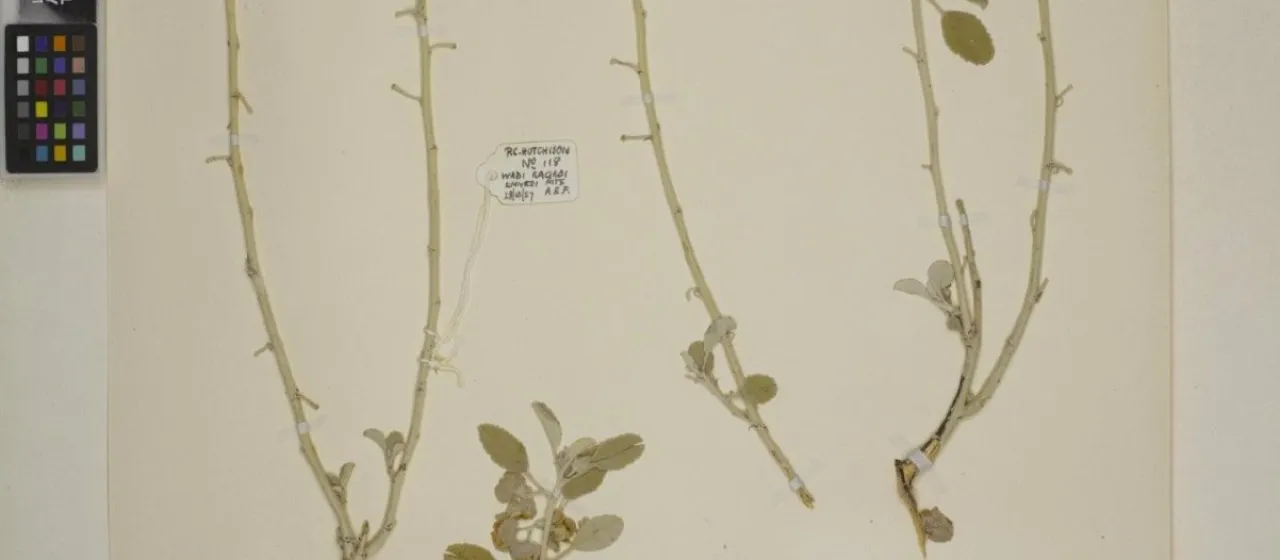
Description
Melhania denhamii is a perennial herb or small shrub belonging to the Malvaceae family. While not a conventional commercial crop, this plant is of great significance in arid and semi-arid regions, serving as a vital source of biomass and forage in environments where agricultural options are severely limited.
The species is native to the arid and semi-arid zones of Africa, particularly across the Sahel and Eastern African regions. Over centuries of evolution, it has developed specific physiological mechanisms to survive in harsh desert and savanna climates, making it an essential component of the local xerophytic vegetation.
Botanically, Melhania denhamii features branched stems and pubescent foliage, which serves as a protective layer against excessive transpiration. The flowers typically exhibit the characteristic morphology of the Malvaceae family. The plant possesses a robust, deep-reaching root system, allowing it to tap into moisture reserves deep within the soil profile.
Regarding cultivation requirements, the plant thrives on well-drained, sandy, or loamy soils. It has low demand for artificial fertilizers and is highly resilient to poor soil fertility. In terms of agronomy, it is best suited for low-input systems aimed at preventing soil erosion and restoring degraded landscapes in arid climatic zones.
The primary agricultural use of Melhania denhamii is as a reliable forage source for livestock. It provides crucial nutrients for cattle, sheep, and goats during the dry season when most other vegetation is unavailable. Its ability to persist in challenging conditions makes it an excellent candidate for sustainable rangeland management and desertification control efforts.
- Exceptional drought resistance.
- Adaptability to poor soil conditions.
- Vital source of fodder in arid regions.
- Potential for soil erosion control.
- Low input and maintenance requirements.