
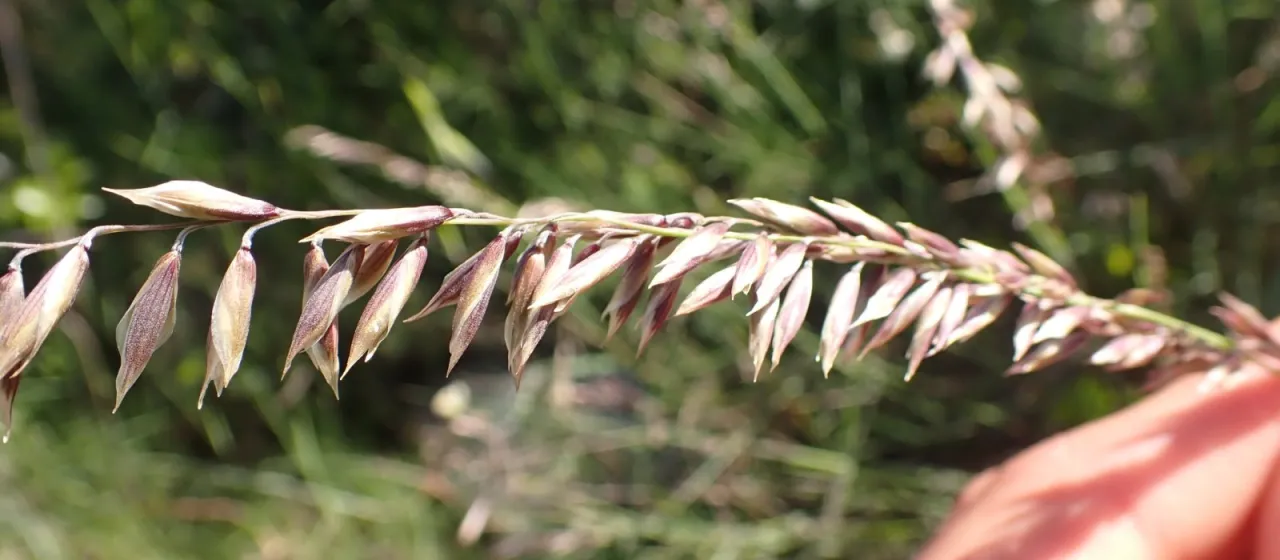
Description
Amethyst melic (Melica amethystina) is a perennial grass species belonging to the family Poaceae. While not commonly treated as a primary commodity crop, it serves as an important component in grassland management and restoration projects due to its distinct appearance and resilience. The species is characterized by its graceful, amethyst-colored inflorescences which provide high visual appeal alongside its functional agricultural properties.
The native distribution area of this grass is primarily located throughout Southern Europe and the Mediterranean Basin. It is naturally adapted to Mediterranean climatic conditions, characterized by warm, dry summers and mild winters. This inherent adaptation to drought makes it a significant candidate for ecological research and potential inclusion in drought-resistant pasture mixtures in similar global climates.
Botanically, the plant forms loose tussocks, typically growing between 30 and 80 centimeters in height. The foliage is narrow and often rough to the touch, contributing to a dense biomass profile. The inflorescence is a nodding panicle with spikelets displaying deep purple or violet hues. Its root system is fibrous and extensive, which is beneficial for stabilizing soils and minimizing erosion in sloping environments.
Regarding soil and agronomic requirements, Melica amethystina thrives best in well-drained, alkaline or neutral soils rich in minerals. It is essential to avoid poorly drained areas where water stagnation can cause root decay. Agronomic maintenance requires adequate sunlight and minimal nutrient inputs, although periodic mowing or light grazing can maintain the vigor of the stand and promote healthy regrowth during the vegetative season.
In terms of хозяйственное usage, it is valued for soil erosion control, landscaping, and forage supply in semi-natural pastures. Like most grasses, it can be susceptible to common pathogens such as rust fungi, powdery mildew, and pests like cereal aphids, which require monitoring.
- High drought tolerance.
- Ornamental value in landscapes.
- Soil stabilization capabilities.
- Adaptability to nutrient-poor soils.