
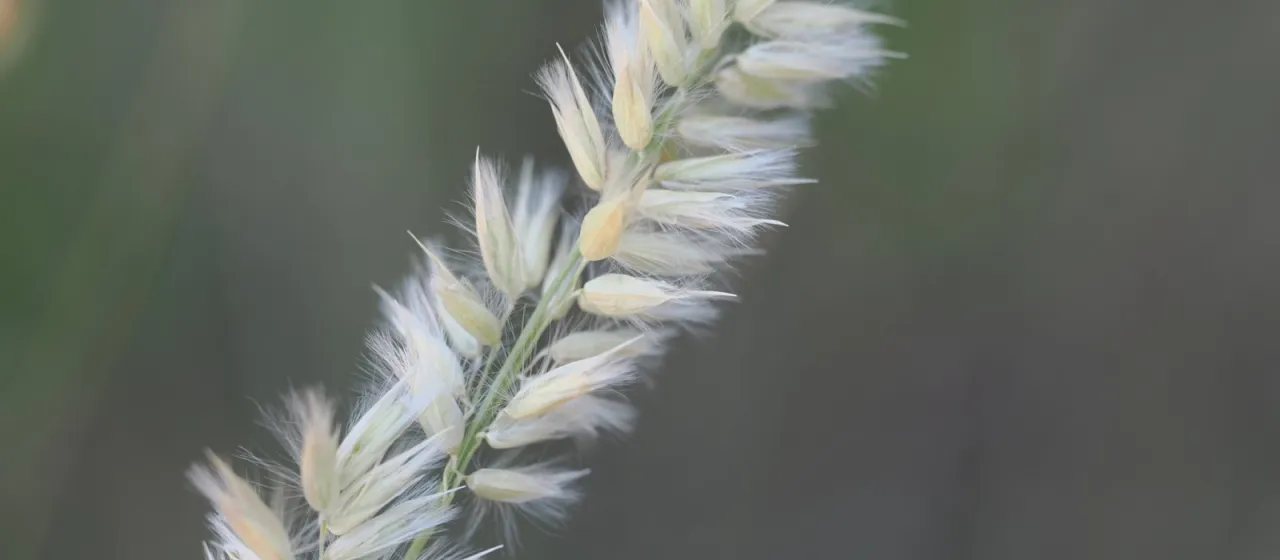
Description
Silky spike-melic (lat. Melica ciliata) is a perennial grass species belonging to the Poaceae family. Known for its distinct appearance and resilience, this plant has gained attention as a sustainable forage source and a stabilizer for fragile ecosystems in various agricultural regions.
Originating from Eurasia and North Africa, the species is widespread in dry, open habitats, including rocky slopes and limestone grasslands. Its geographical adaptability allows it to thrive in diverse environments, ranging from temperate zones to semi-arid regions where other forage crops struggle to establish.
The botanical structure consists of erect stems ranging from 30 to 80 cm in height, forming dense, fibrous tussocks. The most striking feature is its dense, cylindrical panicle, which appears fluffy or "silky" due to the long hairs on the glumes. The leaves are typically narrow, flat, and green, providing a dense ground cover.
Regarding cultivation, this grass is highly drought-tolerant and thrives in well-drained, nutrient-poor, or calcareous soils. Agronomic practices focus on ensuring proper seed contact with the soil during spring or autumn sowing. It requires full sunlight to maintain its vigor and structure, and it is largely indifferent to intensive fertilizer inputs.
The primary economic use involves grazing livestock, where it serves as a reliable green feed. Beyond its forage value, it is widely used in environmental engineering for soil stabilization and slope protection against water and wind erosion. Its aesthetic appeal also makes it a popular choice for xeriscaping and sustainable garden design.
- Superior drought and heat tolerance.
- Excellent ground-binding properties for erosion control.
- Low maintenance and minimal fertilization requirements.
- High ecological value for supporting biodiversity.
Pest and disease management is generally straightforward as the species possesses a robust natural defense system. While rust and smut fungi may occasionally appear in very dense stands with high humidity, standard cultural practices such as timely harvesting or controlled grazing are usually sufficient to maintain plant health without chemical intervention.