
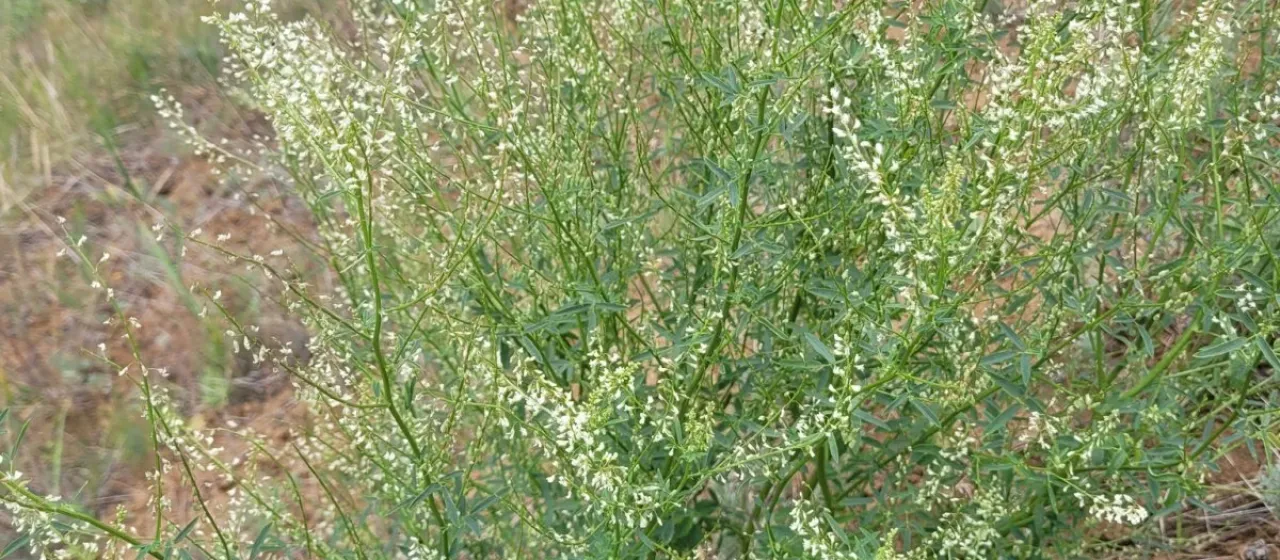
Description
Volga sweetclover (Melilotus wolgicus) is a biennial legume belonging to the Fabaceae family. It is recognized in agriculture as a highly resilient crop capable of thriving in extreme environmental conditions, such as arid steppes and saline soils where other forage crops fail to establish.
The origin of this species is linked to the Eurasian steppes, particularly the Volga River basin. Its natural adaptability has led to its distribution across regions with harsh, continental climates. It serves as a pioneer species in reclaiming degraded and nutrient-poor land, contributing significantly to sustainable land management.
Botanically, the plant features a deep, powerful taproot system that aids in soil aeration and moisture absorption. Its stems are erect and highly branched, often exceeding 1.5 meters in height. The trifoliate leaves and racemes of yellow flowers define its appearance, making it a prolific honey producer during the blooming season.
Cultivation requirements for this species are relatively low. It prefers well-drained soils but shows remarkable tolerance to alkalinity and salinity. Agricultural success depends on seed scarification to break dormancy and ensure uniform emergence. It is frequently used in crop rotation to fix nitrogen and improve soil structure for subsequent demanding crops.
Economically, Volga sweetclover is valued for its high protein content when harvested as forage and its role as an exceptional honey-producing plant. Pathogens such as powdery mildew or rust may affect the yield, while pests like weevils can cause damage during the seedling stage, requiring vigilant monitoring during the early growing season.