
Description
Natal grass (Melinis repens) is a perennial grass species belonging to the Poaceae family. It is widely recognized as a robust forage crop, though its aggressive spreading habit has led to it being categorized as an invasive species in several parts of the world outside its native range.
The plant originates from Southern Africa and has successfully colonized diverse tropical and subtropical regions across the globe. Its ability to colonize nutrient-poor and degraded soils makes it a significant species for land reclamation projects and pastoral development in arid environments where other vegetation struggles to survive.
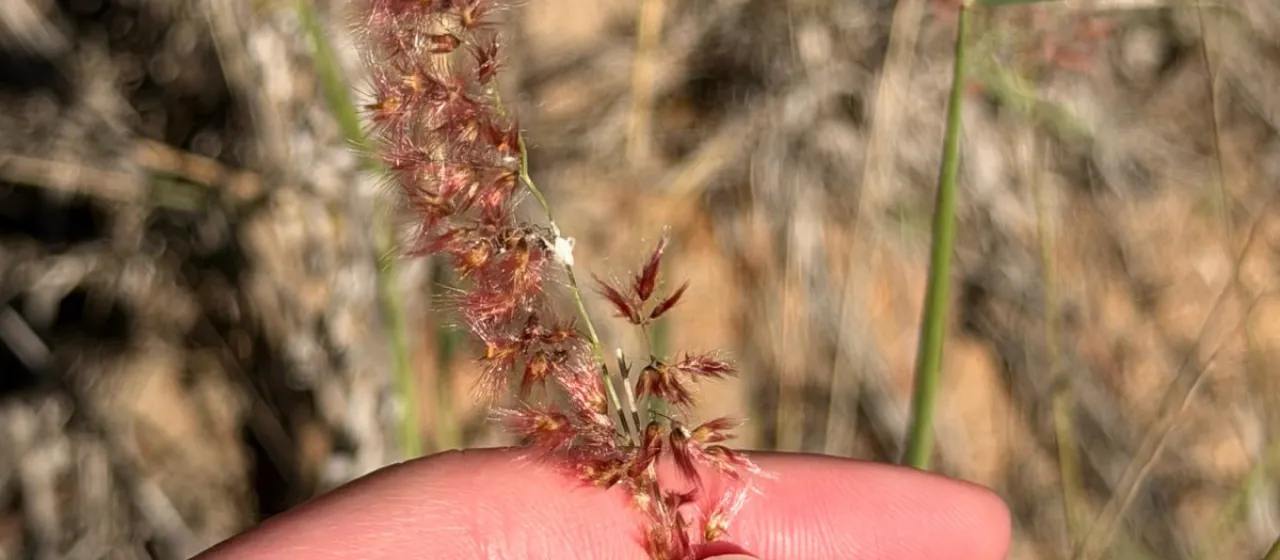
Botanically, Natal grass is characterized by its tufted growth habit, reaching heights of 30 to 100 cm. The most striking features are its delicate, pink-to-red panicles that cover the plant during the flowering season. These inflorescences are not only beautiful, making it a popular choice for ornamental use, but also serve as a key identifier for the species.
The cultivation requirements are relatively modest. The grass is highly drought-tolerant and thrives in full sun exposure on well-drained, sandy soils. Agricultural management usually involves minimal fertilization, as the plant is adapted to low-nutrient environments. Controlled grazing is essential to manage biomass density and prevent the plant from becoming overly dominant in a pasture ecosystem.
Regarding pest and disease resistance, Natal grass is generally resilient. However, under conditions of excessive humidity, it may be susceptible to fungal leaf spots. In terms of economic utility, it serves primarily as forage for livestock. Given its adaptability and persistence, it is considered a reliable, albeit aggressive, choice for supporting grazing animals in warm, dry climates.