
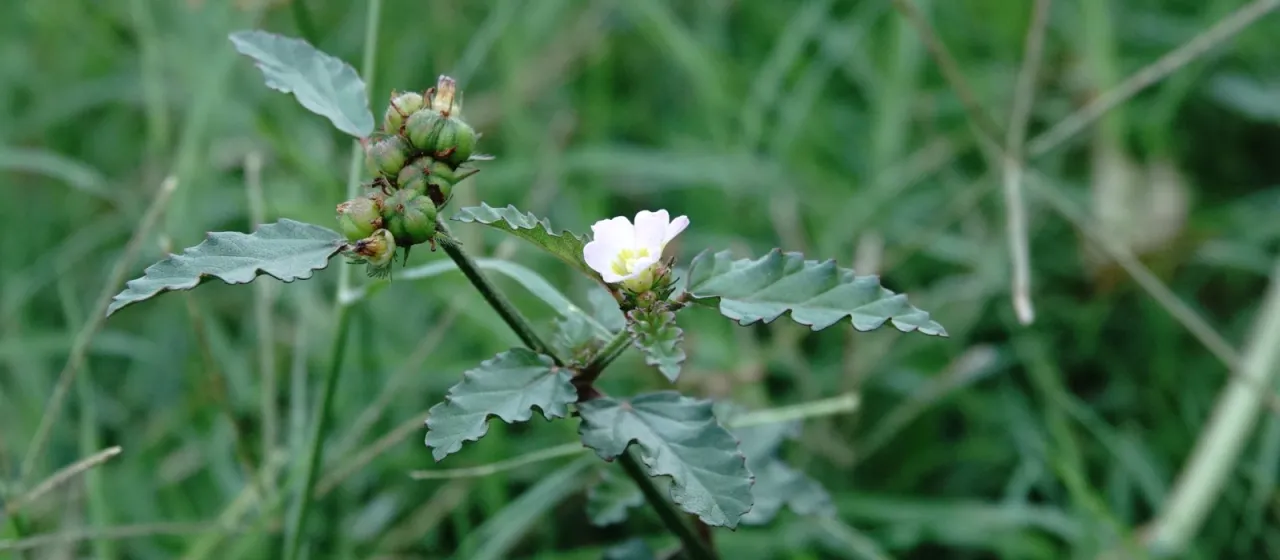
Description
Melochia corchorifolia, commonly known in some regions as chocolate weed, is an annual herbaceous plant belonging to the Malvaceae family. While often considered a persistent weed in rice cultivation, it has significant potential as a fiber-producing plant due to its bast fibers, which share characteristics with jute and kenaf.
The plant originates from the tropical regions of Asia. Its natural range encompasses countries like India, China, and various parts of Southeast Asia, where it thrives in warm, humid environments. In many regions, it has naturalized as a resilient plant, colonizing riparian areas, wetlands, and open agricultural plots.
Morphologically, it is characterized by a straight, branched stem growing up to 1 meter in height, with alternate ovate leaves. Its flowers are distinctively small, appearing in clustered inflorescences with purple or pink petals. The fruit is a small, five-valved capsule containing seeds that can persist in the soil seed bank for several years.
Regarding cultivation, Melochia corchorifolia requires consistent tropical temperatures and high soil moisture levels for optimal growth. It is highly competitive in sunny locations with fertile, silt-rich soils. Standard agricultural practices involve managing plant density to maximize biomass production, as the quality of the fiber depends heavily on the uniformity of stem growth.
- Extraction of high-quality bast fiber for textile and packaging materials.
- Use of leaves as a traditional dietary vegetable in certain tropical cultures.
- Potential application in erosion control due to its robust root system.
- Medicinal use in various herbal preparations for its anti-inflammatory properties.
The crop is susceptible to various pests, particularly those targeting the Malvaceae family, including the cotton leafworm and aphids. Common diseases include stem rot and various fungal infections that occur under conditions of excessive humidity. Effective crop management requires integrated pest control strategies to maintain high yields and fiber quality.